The State Department is making a major move to put far-left political violence on the same level as jihadist terrorism, and Secretary of State Marco Rubio is leading the charge.
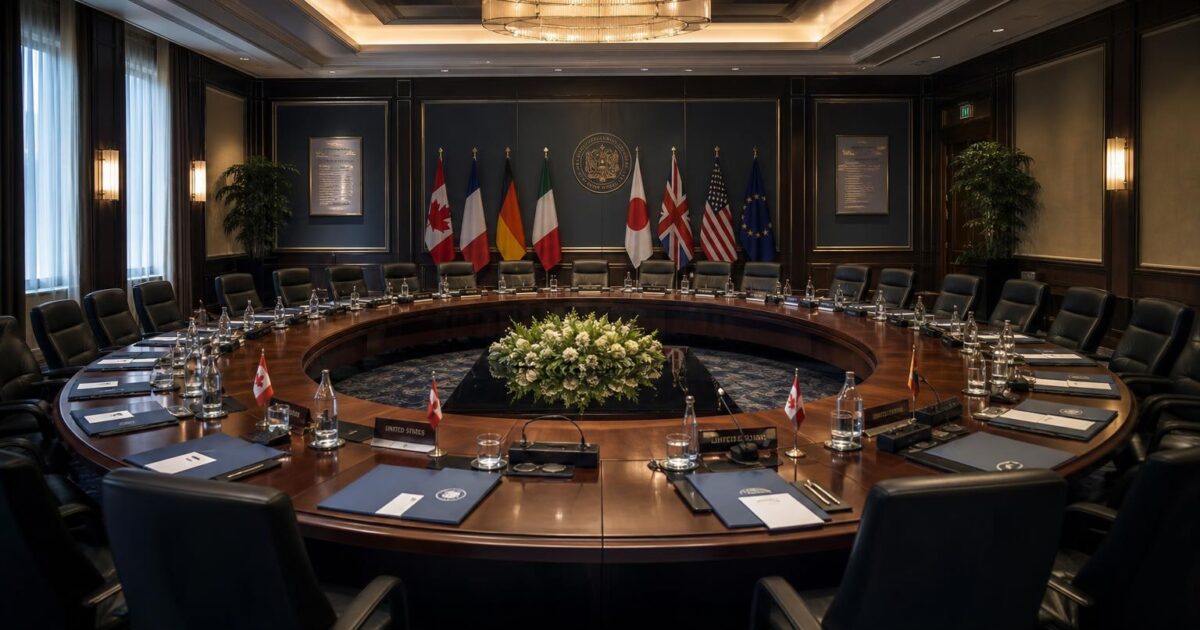
Rubio convened the Ministerial on the Resurgence of Political Terrorism, a high-level gathering that brought together governments from the Western Hemisphere, Europe, and Asia. The goal was clear: expand international cooperation against far-left and anarchist violence through better information sharing, law enforcement coordination, and travel restrictions targeting violent actors in these networks.
The numbers behind the push are striking. The State Department says far-left terrorists were responsible for 93% of terrorist attacks and 58% of terrorism-related deaths in the West between 1970 and 1980. More recently, far-left plots and attacks have sharply increased in both the United States and Europe since 2016. In 2025 alone, far-left actors were responsible for 63% of recorded anti-government attacks or plots in the United States.
Special offer for our readers:
Put Interest On Ice into 2027
As originally reported, Rubio opened his remarks by pointing to real progress on jihadist terrorism in Europe. “The number of people killed by jihadist terrorism in Europe dropped by roughly 97 percent from the year 2015 to the year 2024,” he said. “In other words, to a very great extent, our counterterrorism strategy has worked.”
But Rubio was quick to identify where that strategy came up short. “For far too long, our counterterrorism doctrine has had a blind spot. A blind spot when it comes to extremist violence from the political left,” he said. He argued the jihadist threat has been “severely diminished,” but that far-left violence never received the same serious treatment from policymakers.
The threat, according to the department, is not confined to American shores. In 2024, there were 21 attacks in the European Union attributed to far-left and anarchist terrorists, compared with 24 jihadist attacks that same year. Of 45 reported terrorist attacks in Europe in 2025, 12 were linked to far-left and anarchist actors. Europe has also seen record numbers of attacks on rail networks, critical infrastructure, and private businesses over the past three years.
The department described the broader threat as “transnational far-left terrorism,” pointing to attacks on private citizens, government officials, police, businesses, and critical infrastructure. Officials also noted overlap between far-left terrorist networks and violent anti-American, antisemitic, and anti-tech movements.
The State Department has already designated four violent far-left groups as Foreign Terrorist Organizations and Specially Designated Global Terrorists, with more designations currently under review. In December 2025, the department announced Rewards for Justice offers of up to $10 million for information that disrupts financial mechanisms supporting these groups.
The effort signals a significant shift in how Washington frames the counterterrorism conversation, one that Rubio is clearly intent on pushing far beyond U.S. borders.