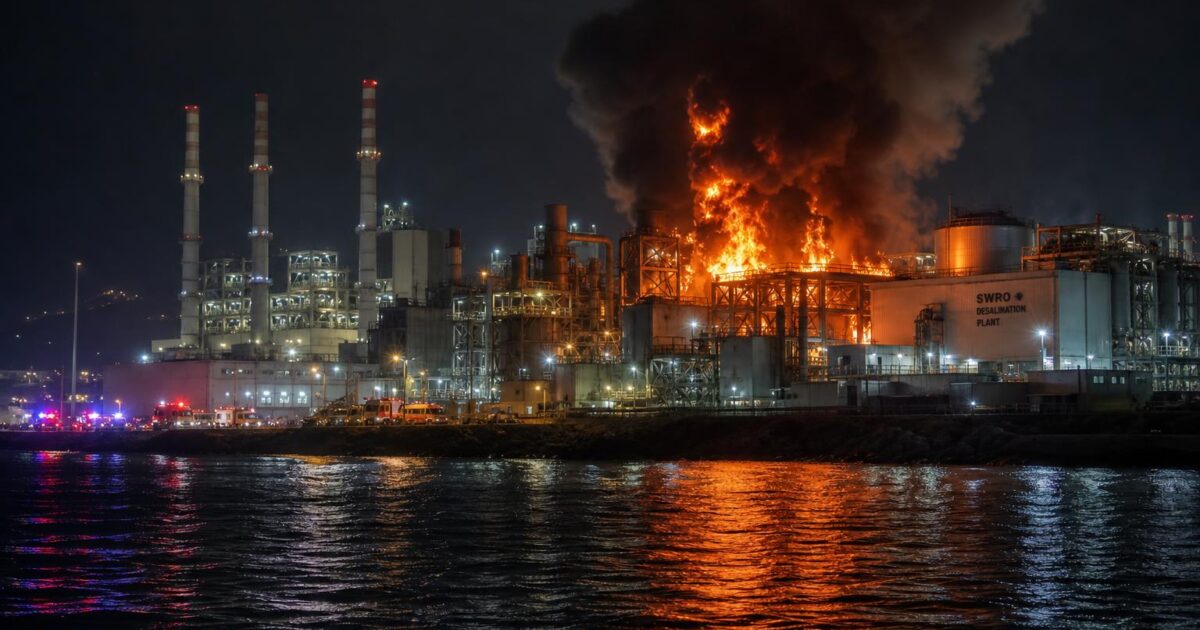
Iran has launched missile strikes against critical infrastructure in Kuwait, hitting a power and desalination facility in what marks a significant and dangerous escalation against one of Washington’s closest Gulf partners.
The timing was no coincidence. The attack came as American forces completed a sixth consecutive day of strikes inside Iran, with the U.S. expanding its target list to include bridges and airport infrastructure. President Donald Trump has also signaled that Iranian power plants could be next.
As originally reported, the strike on Kuwait represents a sharp and troubling shift in the conflict, with Tehran moving away from purely military targets and toward civilian infrastructure that Gulf populations depend on to survive.
Special offer for our readers:
Pay No Interest Until 2027
In Kuwait, desalination is not optional. It is how the country produces much of its drinking water. The attack reportedly sparked fires and disrupted power service, stoking fears that Iran is now prepared to threaten electricity and water supplies across the entire region.
Kuwait was not the only target. Iran also launched attacks against other U.S. allies, including Qatar, Jordan, and the Kurdish population in northern Iraq. Tehran additionally claimed strikes on American military bases in Bahrain, Qatar, and Kuwait, along with a radar installation in Oman. Explosions were reported in Doha.
The broader escalation unfolded against the backdrop of sustained U.S. pressure inside Iran. Following American strikes on bridges, airport facilities, and military-linked targets, Iran’s Energy Ministry urged its own citizens to reduce power consumption, a sign that the strikes were having real effect.
Meanwhile, U.S. naval forces redirected three commercial vessels that had been attempting to navigate around a renewed American blockade in the Strait of Hormuz. The blockade targets ships moving to and from Iranian ports, part of Washington’s effort to prevent Tehran from weaponizing the waterway against global energy markets.
The Strait of Hormuz remains one of the most critical energy chokepoints on the planet. Iran has long threatened to use it as leverage against Western nations, and the current standoff is pushing that threat closer to reality.
What is becoming clear is Tehran’s willingness to raise the cost of alliance with Washington. By striking civilian infrastructure rather than military installations, Iran is sending a direct message to Gulf states: standing with the United States carries consequences.
The question now is whether that message triggers restraint among U.S. allies or simply firms their resolve.