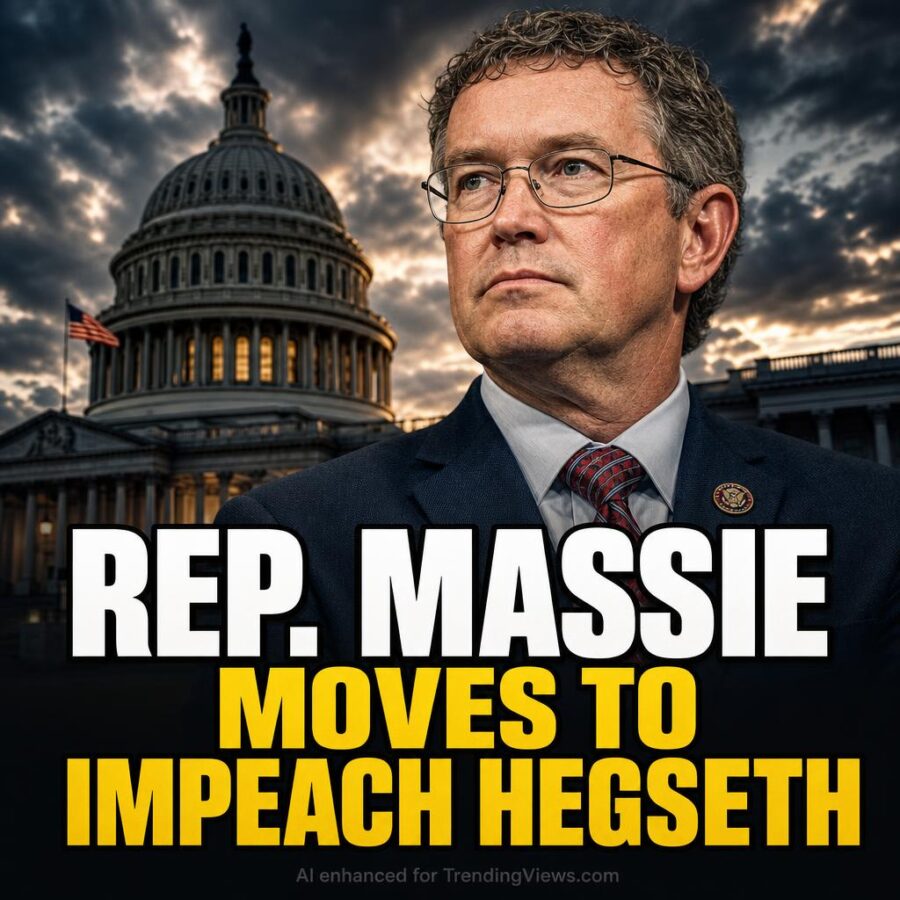
Rep. Thomas Massie filed eight articles of impeachment against Defense Secretary Pete Hegseth on Tuesday.
Massie, a Kentucky Republican who lost his primary earlier this year to a Trump-backed challenger, introduced the resolution on the House floor. He accused Hegseth of committing high crimes and misdemeanors through his handling of military operations involving Iran, Venezuela, and Yemen. Because Massie filed it as a privileged resolution, the House is required to take it up within two legislative days. It faces long odds in a chamber controlled by fellow Republicans.
As originally reported, the first three articles focus on the War Powers Resolution of 1973 and U.S. involvement in the conflict with Iran. Massie argues the administration continued military hostilities beyond 90 days without formal congressional authorization, which he contends violated federal law and encroached on Congress’ war-making authority. Most legal experts, however, view the War Powers Act itself as an unconstitutional constraint on the president’s role as commander-in-chief.
Special offer for our readers:
Put Interest On Ice into 2027
The Trump administration pushed back on that reading, arguing that earlier combat activity and subsequent developments affected how the resolution’s timeline should be calculated. The Pentagon has also defended Hegseth and his record leading the department.
A fourth article charges Hegseth with failing to protect civilians during military operations. Massie pointed to a February airstrike on a school in Minab, Iran, which reportedly caused significant civilian casualties. A fifth article targets U.S. strikes against vessels suspected of drug trafficking in the Caribbean and eastern Pacific. Massie argues those strikes constituted unlawful killings because the people aboard had not faced any judicial process and Congress had not authorized military force against them.
A sixth article accuses Hegseth of improperly retaliating against Sen. Mark Kelly, a Democrat from Arizona, after Kelly appeared in a video reminding service members of their obligation to refuse unlawful orders. A seventh article concerns military operations in Venezuela and the capture of Nicolás Maduro, which Massie characterized as an unauthorized act of war.
The eighth and final article targets the U.S. bombing campaign in Yemen during 2025. Massie argues that operation was carried out without congressional authorization and without an imminent threat that would justify bypassing Congress.
Massie said lawmakers have a responsibility to enforce constitutional limits on military action and hold executive branch officials accountable when those limits are exceeded. Hegseth is not facing this effort alone. House Democrats separately introduced their own impeachment attempt against him earlier this year.
Whether Massie’s resolution gains any traction remains unclear, but with Republicans holding the chamber, its path forward is narrow at best.