For years, the American political conversation around political violence ran in one direction. After federal courthouses were attacked, after Supreme Court justices required security details at their homes, after multiple assassination attempts against a sitting president, the dominant media narrative kept pointing elsewhere.
Marco Rubio just changed the conversation.
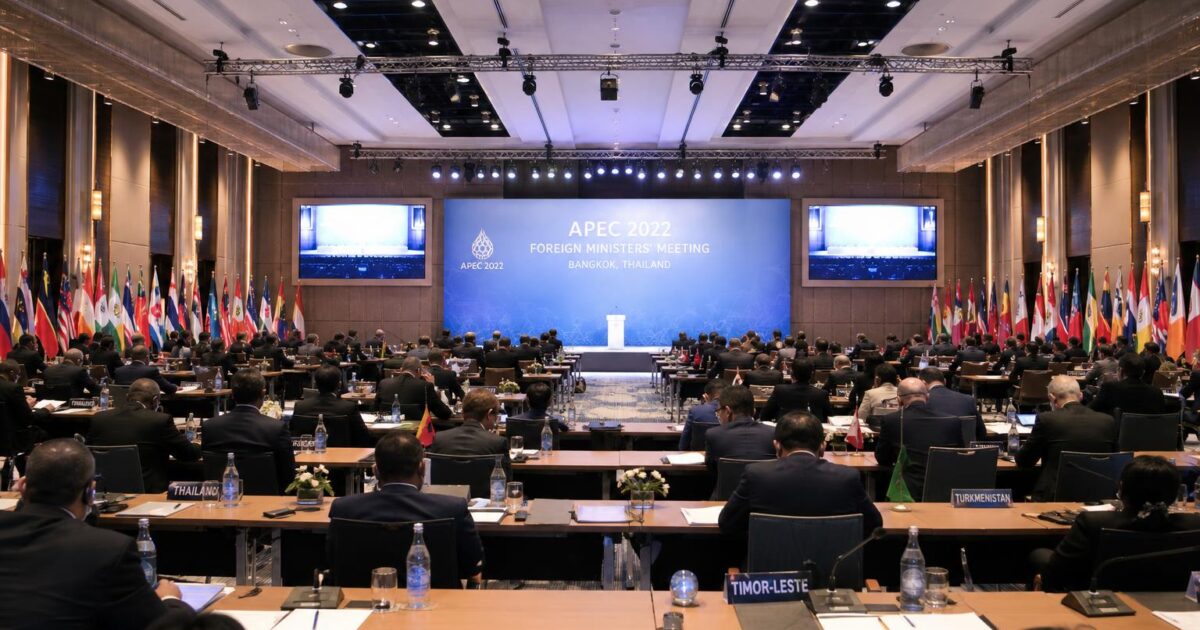
Speaking at a State Department ministerial attended by roughly 65 foreign delegations, the Secretary of State delivered what may be the most direct public condemnation of far-left political violence ever delivered by a senior American official on the world stage. He called it terrorism. And he called for international cooperation to stop it.
Special offer for our readers:
Tackle your credit card debt by paying 0% interest until 2027
As originally reported, Rubio described radical leftism as “a poisonous resentment cloaked in the language of equality and justice.” It is a phrase that cuts directly to how ideological cover has been used to shield an escalating pattern of arson, rioting, targeted attacks on law enforcement, and organized violence from the label it deserves.
The administration’s own counterterrorism analysis backs him up. Far-left terrorist attacks and plots have risen to levels not seen in decades. Law enforcement agencies have been tracking this surge since 2020, and the documented data aligns with what Rubio said at the podium.
The international angle is where this story gets even more urgent.
In July, coordinated firebomb attacks against members of Greece’s governing party killed one woman and injured four others. In January, arsonists targeted a power transmission facility in Berlin, knocking out electricity for tens of thousands of German residents. Federal prosecutors investigated that attack as the work of a suspected terrorist organization.
These are not isolated incidents. Far-left extremist networks have been coordinating across national borders, sharing encrypted communications, training materials, financing, and in some cases operating alongside hostile foreign states.
That cross-border dimension is precisely why Rubio took the message to an international audience. Domestic law enforcement can only do so much when the networks extend across multiple jurisdictions and governments.
The summer of 2020 made clear what happens when political violence is minimized, rebranded as protest, or simply ignored by those with platforms and power. Buildings burned. Officers were injured by the hundreds. The cost was measured in lives and billions of dollars of destruction.
Rubio’s remarks represent a formal, high-level rejection of that approach. Naming something accurately is not a small act when institutions have spent years refusing to do it. Whether the international delegations in that room take the warning seriously remains to be seen, but the message from the top of American diplomacy is now unambiguous.
Far-left political violence is terrorism. And the United States is done pretending otherwise.