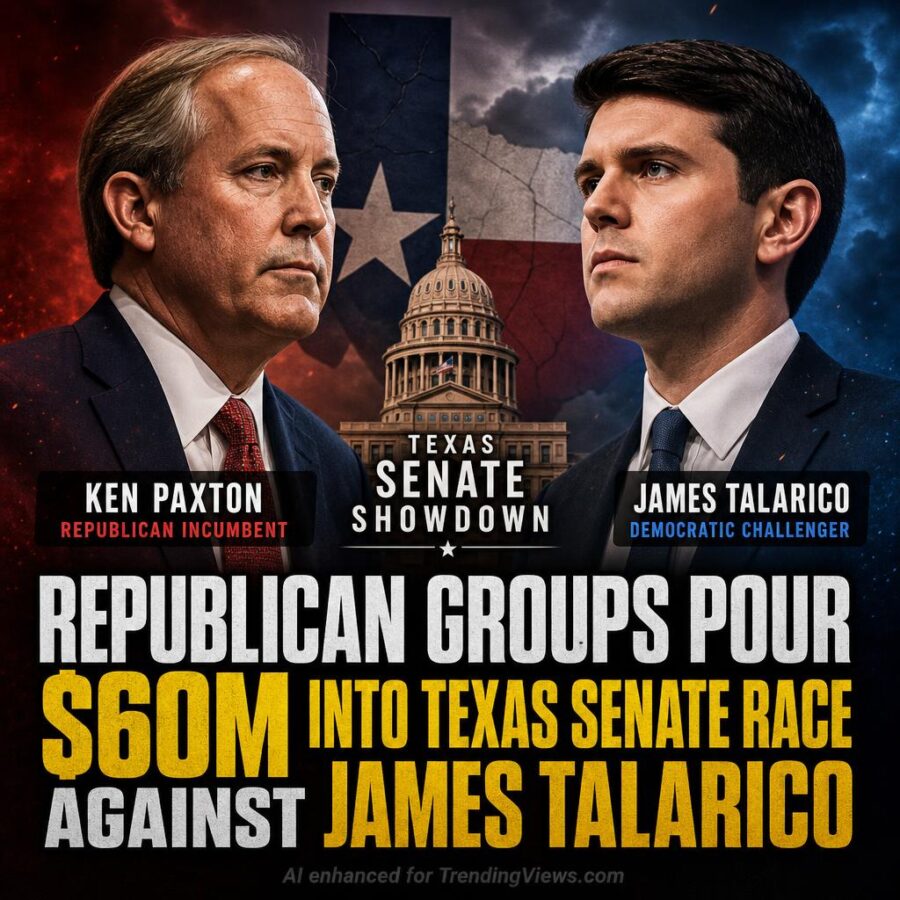
Republican outside groups have now committed roughly $60.8 million to the Texas Senate race, flipping the financial advantage away from Democrat James Talarico.
For most of the summer, Talarico held a commanding lead on the airwaves. Since June, Democrats outspent Republicans by roughly 7-to-1 in the race, with Talarico’s campaign alone putting more than $30 million into advertising while Ken Paxton and Republican-aligned groups spent a fraction of that total. That gap has now closed fast.
The shift began when the Senate Leadership Fund, a super PAC tied to Senate Majority Leader John Thune, entered the race Friday through a newly formed entity called Texas PAC. The group immediately purchased about $32 million in broadcast television advertising across the Dallas-Fort Worth, Houston, San Antonio, and Austin media markets, according to advertising tracker AdImpact.
Special offer for our readers:
Hands Down Some Of The Best Credit Cards For 2026
As originally reported, that initial buy was just the start. MAGA Inc., the super PAC aligned with President Donald Trump, committed $10 million to back Paxton and oppose Talarico. Elon Musk’s America PAC added another $2.6 million in phone calls, text messages, and printed advertising supporting Paxton and targeting Talarico.
Total Republican spending, counting ads already aired and reservations running through the end of September, now sits at approximately $60.8 million, according to AdImpact figures. Democratic spending over the same period totals around $43.7 million, with nearly all of it coming directly from Talarico’s own campaign.
The raw dollar comparison, however, does not tell the whole story. Federal rules require broadcasters to offer candidates favorable advertising rates during certain periods before an election. That means Talarico’s campaign can buy television and radio time more cheaply than Republican super PACs purchasing ads on Paxton’s behalf. Outside groups may need to spend considerably more money to match the same volume of airtime Talarico’s campaign can secure at candidate rates.
Talarico also entered the fall with a substantial cash advantage built up over months of aggressive fundraising. Federal Election Commission filings through June 30 showed he had raised about $68.6 million and held roughly $21.5 million in cash on hand. Paxton’s two federal campaign committees had raised approximately $9.2 million and reported less than $2 million available at the same point. That early advantage allowed Talarico to spend heavily throughout the summer, introducing himself to voters and airing attacks on Paxton before national Republican money arrived at scale.
Paxton secured the Republican nomination by defeating incumbent Sen. John Cornyn, a four-term senator who had the backing of Senate Republican leaders during the primary. National Republican groups had largely kept their distance from the Texas race after that primary result. The wave of new spending signals a sharp change in that posture, with the party now treating the state as a race worth defending at full force.