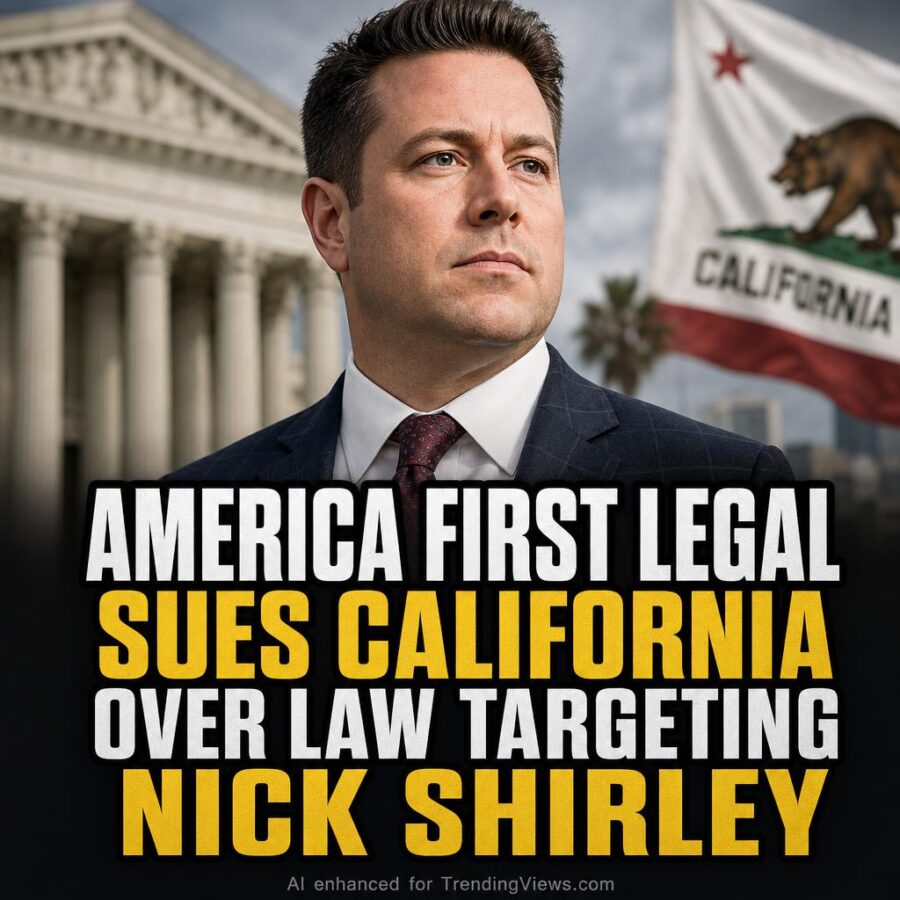
California lawmakers literally named a censorship bill after a journalist to stop him from reporting.
Independent journalist Nick Shirley and the America First Legal Foundation have filed a federal lawsuit to block enforcement of a new California law that restricts journalists and independent auditors from documenting and reporting fraud. The case, Shirley v. Bonta, was filed September 4 in the U.S. District Court for the Eastern District of California in Sacramento. Named defendants are Attorney General Rob Bonta and Secretary of State Shirley Weber.
The law in question expands California’s existing Safe at Home program, which has been in operation since 1999. That program lets eligible individuals use a substitute mailing address managed by the California Secretary of State, shielding them from threats. Historically, participants have included survivors of domestic violence, sexual assault, stalking, human trafficking, elder abuse, and certain health care workers.
Special offer for our readers:
Pay No Interest Until 2027
As originally reported, the new legislation extends eligibility to immigration support services providers, their employees, and volunteers at nonprofits, community legal clinics, law offices, and health facilities who can document threats or incidents related to their work within the prior year. It also prohibits knowingly posting, selling, or sharing a participant’s personal information or image online with intent to facilitate harassment, violence, or credible threats.
Republican Assemblymember Carl DeMaio and his colleagues gave the measure a pointed nickname: the “Stop Nick Shirley Act.”
The lawsuit’s complaint lays out a telling timeline. Shirley posted that he arrived in California on January 31, 2026. Attorney General Rob Bonta publicly criticized related fraud allegations just days later. Assemblywoman Mia Bonta then introduced the legislation on February 20.
Plaintiffs argue the law, AB 2624, violates the First Amendment by imposing content-based and viewpoint-discriminatory restrictions on speech. They also contend it is unconstitutionally overbroad and vague under the Fourteenth Amendment, and that it functions as an ex post facto law under Article I, Section 10 of the Constitution.
A central argument in the complaint is that liability under the law depends specifically on whether speech involves immigration-support providers, rather than applying equally to similar organizations on opposing sides of the immigration debate. Plaintiffs further argue that written takedown demands and potential legal liability are already chilling lawful reporting on public expenditures, even before the law takes effect.
Shirley and America First Legal are asking the court to declare the challenged provisions unconstitutional both on their face and as applied. They are also seeking preliminary and permanent injunctions against enforcement, along with attorney fees. No monetary damages from the state are being requested.
The case puts California in the unusual position of defending a law that critics say was drafted specifically to silence a named individual’s reporting, raising significant First Amendment questions that a federal court will now have to answer.