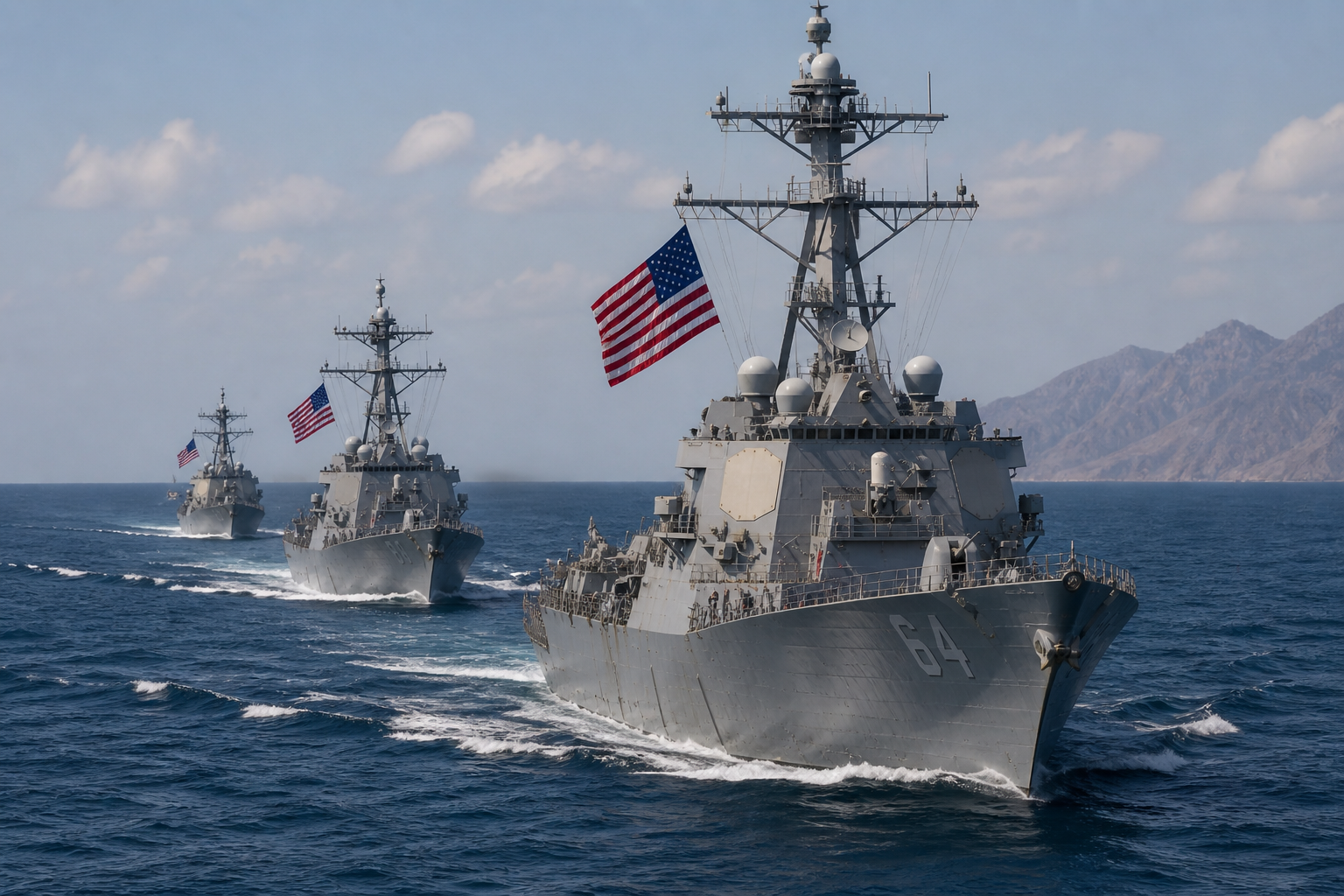
On May 4, 2026, U.S. Central Command (CENTCOM) announced the destruction of six Iranian boats that were perceived to be threatening commercial vessels in the Strait of Hormuz. This action occurred as part of a military initiative dubbed “Project Freedom,” which was launched by President Donald Trump.
Details of the Operations
During a press call, Admiral Brad Cooper, the head of CENTCOM, informed reporters that the U.S. Navy effectively responded to Iranian forces, which had emerged to challenge commercial shipping activities within this critical maritime passage. He stated, “We have defeated each and every one of those threats,” highlighting the U.S. commitment to protecting both its interests and those of commercial shipping vessels.
Admiral Cooper elaborated on the engagement, mentioning that the U.S. utilized various military assets, including Apache helicopters. He noted that the defensive measures taken were comprehensive, indicating the use of multiple layers of protection, such as ships, helicopters, and electronic warfare capabilities. Cooper emphasized that this broader defensive arrangement has proven effective, especially in the hours following the recent exchange of fire.
Special offer for our readers:
Tackle your credit card debt with 0% intro APR
Recent Developments in the Region
In the wake of the military actions, two U.S. ships successfully navigated through the Strait of Hormuz within the last 24 hours, marking a significant operational milestone. However, when questioned about the current state of ceasefire negotiations between the U.S. and Iran, Cooper refrained from confirming whether the ceasefire was still in effect.
Project Freedom is not merely about direct escorting of commercial vessels; instead, it aims to establish a significant defensive posture designed to secure safe passage for maritime traffic in the strait. Admiral Cooper expressed confidence in this strategy, stating that it offers a superior protective framework compared to traditional escort operations.
Political Context and Negotiations
President Trump also addressed the situation, indicating that negotiations with Iran are ongoing but have encountered obstacles. He described the talks as “disjointed” and remarked on the challenges faced by Iranian leadership. According to the President, the Iranian military has been weakened, and he surmised that if U.S. forces were to withdraw, it could take Iran decades to restore its military and governmental structure.
Trump’s remarks suggest a complex geopolitical landscape, where U.S. military actions are interwoven with diplomatic efforts. The President indicated that Iran is seeking concessions that he cannot accommodate, hinting at the intricate nature of negotiations.
The developments in the Strait of Hormuz highlight the U.S. commitment to ensuring the safety of commercial shipping lanes in a region fraught with geopolitical tensions. Project Freedom appears to represent a multifaceted approach, combining military readiness with diplomatic maneuvers in the challenging landscape of U.S.-Iran relations. As this situation evolves, both military and diplomatic channels will likely remain crucial to shaping the future of U.S.-Iran interactions.