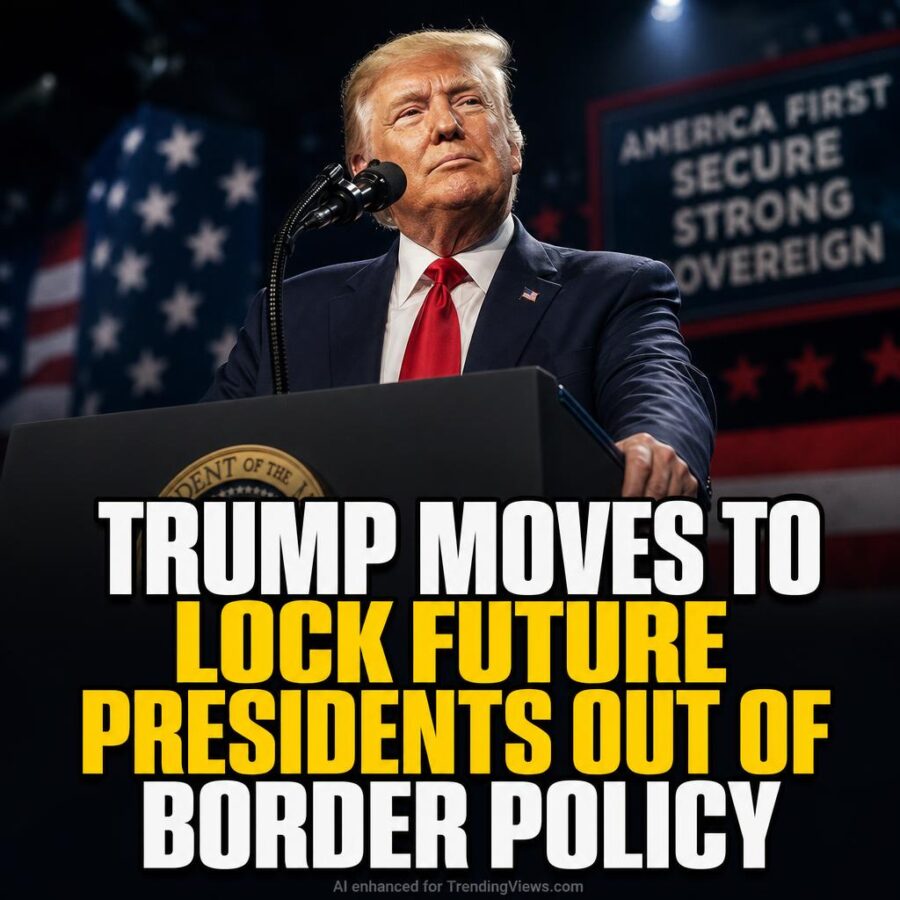
Trump wants to make it legally impossible for any future president to reopen the southern border.
Speaking at the Republican midterm convention in Dallas on Wednesday night, President Donald Trump announced a push for legislation he is calling the “No Invasion of Our Country Act.” The proposal would place hard legal limits on any future president’s ability to ease border enforcement through executive action.
“We will make it legally impossible for any future president to destroy our country by having the right to open the border again,” Trump said at the event.
Special offer for our readers:
Hands Down Some Of The Best Credit Cards For 2026
The announcement was part of a broader effort by Trump to lay out Republican policy priorities heading into the November 3 midterm elections. He used the convention stage to push a series of agenda items for the party.
As originally reported, it remains unclear whether the legislation will be formally introduced or even taken up by Congress before Election Day.
The proposal also runs into a significant constitutional reality. One Congress cannot permanently bind a future Congress. That means any statute passed today could later be amended or repealed by future lawmakers, potentially undermining the whole point of the legislation.
The idea is rooted in Trump’s direct experience with policy reversals. When Joe Biden took office in January 2021, he issued executive orders rolling back a number of Trump-era immigration measures. When Trump returned to the White House in January 2025, his administration moved quickly in the other direction, tightening enforcement, expanding detention, and accelerating deportations.
The new proposal is designed to shift some of those enforcement measures from executive policy into federal statute. That would force any future administration to get congressional approval before loosening border rules, rather than simply issuing new executive orders.
Trump and Republican allies have long argued that relying on executive authority leaves immigration policy dangerously exposed to reversal every time the White House changes hands. It is a legitimate concern with real precedent, as the back-and-forth between the Biden and Trump administrations illustrated clearly.
Still, comprehensive immigration reform has stalled in Congress for decades. Presidents from both parties have leaned heavily on executive power to set enforcement priorities precisely because the legislative branch has failed to act. Whether this latest push breaks that pattern or becomes another stalled proposal remains to be seen.