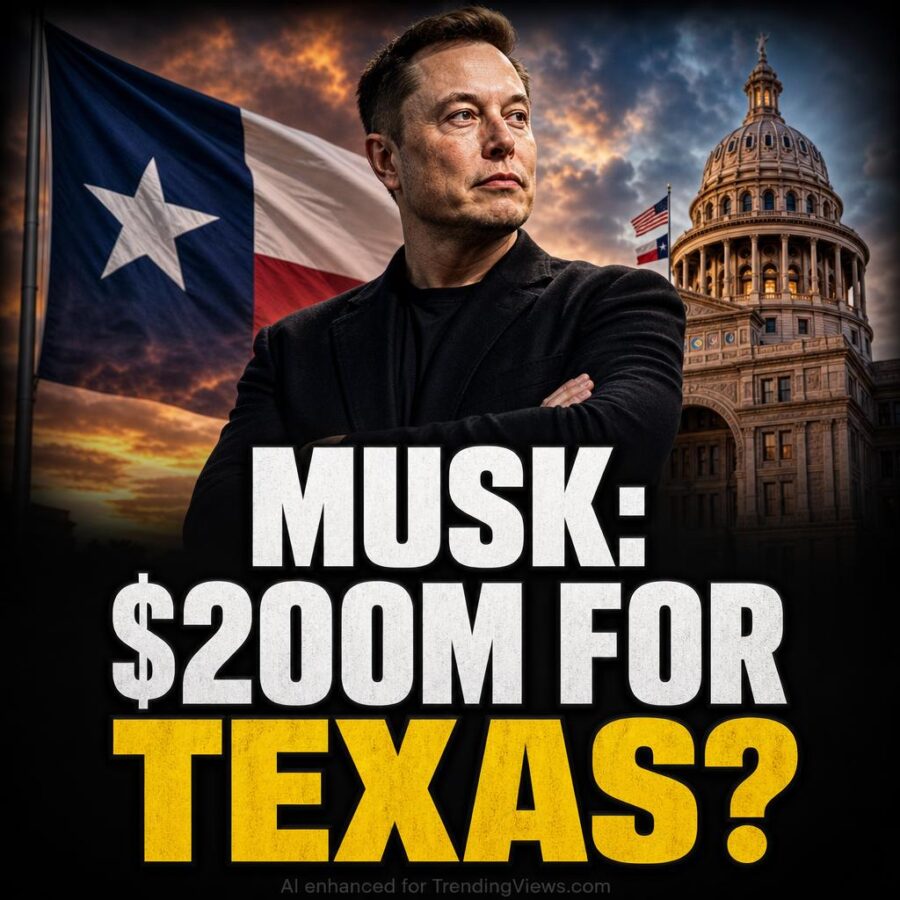
Elon Musk is eyeing a spend of up to $200 million in Texas ahead of the 2026 midterms.
Four sources with knowledge of Musk’s political operation told journalist Mark Halperin that the billionaire and his team are weighing a minimum outlay of $50 million in Texas, with the ceiling reaching as high as $200 million before Election Day. That would be a staggering commitment to a single state’s political battlefield.
As originally reported, the funds would not flow primarily into traditional television advertising. Instead, much of the investment is expected to target voter turnout operations and campaign infrastructure, along with a sophisticated digital effort aimed directly at Texas voters.
Special offer for our readers:
Put Interest On Ice into 2027
Republicans are working to hold a key Senate seat in the state, and Musk’s potential spending would represent a dramatic escalation of his personal involvement in the midterm cycle.
His political vehicle, America PAC, has already started moving money into the Texas Senate race. Federal campaign finance disclosures show the PAC spent nearly $250,000 to back Republican nominee Ken Paxton and counter Democratic nominee James Talarico. That figure represented the largest single-state share of America PAC’s first reported midterm disbursements, which totaled roughly $800,000 across competitive races nationwide.
The scope of what is being discussed dwarfs that early spending. If Musk follows through at even the lower end of the reported range, his Texas investment alone would be orders of magnitude larger than anything his PAC has committed so far in this cycle.
The Texas Senate race is shaping up as one of the most expensive and closely watched contests of the 2026 midterms. Musk’s potential entry at this scale could fundamentally reshape the financial dynamics of the race and set a new benchmark for outside spending in state-level contests.
No final decisions have been reported, and the figures represent what sources describe as active internal discussions rather than confirmed commitments.