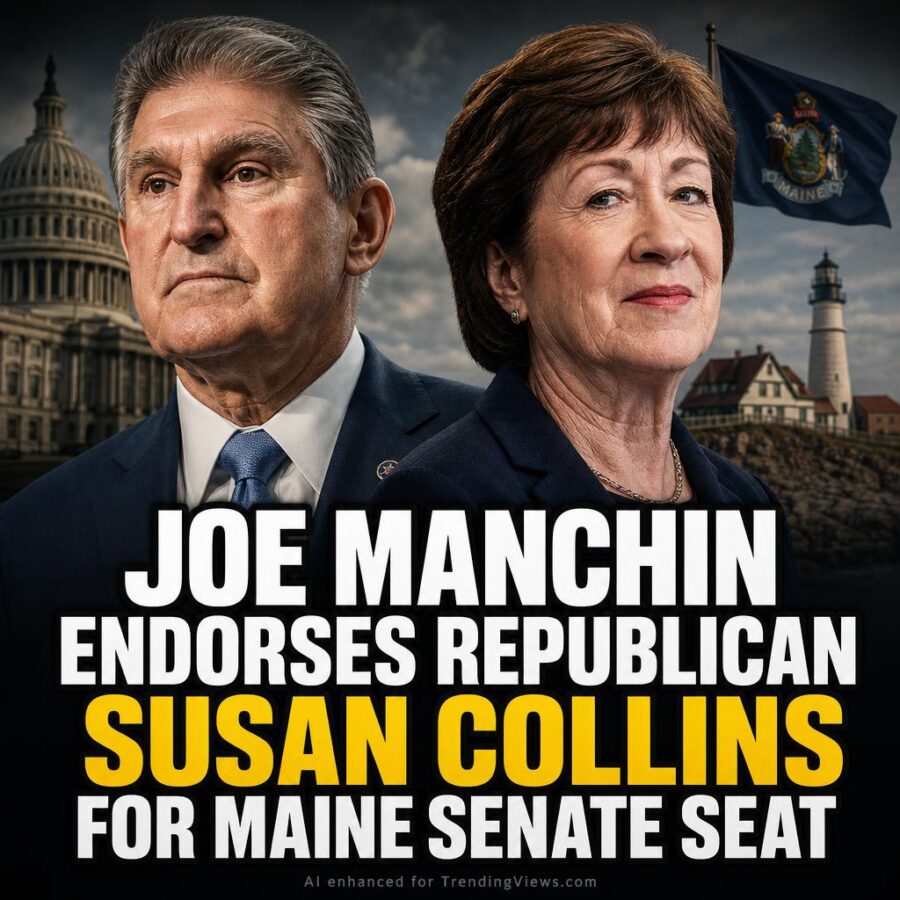
Joe Manchin just endorsed a Republican senator, calling her the “soul of the Senate.”
The former Democratic senator from West Virginia made his support for Republican Sen. Susan Collins official Monday, appearing on CNBC’s Squawk Box to back her reelection bid in Maine. Manchin, who left the Democratic Party in 2024 and registered as an independent, said he plans to actively help her campaign.
If Susan Collins loses, you’re losing the soul of the Senate,” Manchin said on air. “Basically, a person you can talk to, who wants to do the right thing all of the time.” He added, “I’m gonna do everything I can to help.”
Special offer for our readers:
Tackle your credit card debt with 0% intro APR
Manchin served more than a decade in the Senate before declining to seek reelection in 2024. He left office in January 2025.
The endorsement is rooted in years of actual collaboration. As originally reported, Manchin and Collins worked together on multiple bipartisan efforts, most notably the 2022 overhaul of the Electoral Count Act, which clarified how presidential election results are certified following the disputes surrounding 2020. They also partnered on COVID-19 relief negotiations and other cross-party legislation during their Senate years.
Manchin had previously described Collins’ office as a gathering place where senators from opposing parties could hammer out compromises. That reputation for deal-making is central to Collins’ case for a sixth term.
Collins was first elected in 1996 and has won reelection five times in a state that regularly backs Democratic presidential candidates. In 2020, she won 51% of the vote even as President Biden carried Maine statewide. Her political brand has always leaned on that ability to survive as a Republican in competitive territory.
Her opponent this cycle is Democrat Troy Jackson, a former Maine Senate president and former logger who is running on working-class economic issues. Jackson argues Collins has been in Washington too long and has ultimately served to keep Republicans in Senate leadership. He has centered his campaign on labor rights, health care, and rural economic concerns.
Recent polling shows a tight race. A YouGov survey from early September placed Jackson ahead 48% to 44% among likely voters. A CNN/SSRS poll found a similar margin, with Jackson leading 48% to 45%. At least one other survey showed a gap of just one point. No single poll predicts the outcome, but the numbers confirm this is a competitive contest heading into November.
For Collins, Manchin’s endorsement strengthens the bipartisan argument at the core of her campaign. An endorsement from a former Democratic senator carries a different kind of weight than anything her own party can offer.
For Jackson, the task is convincing Maine voters that three decades of Collins in the Senate is reason enough for a change.
Voters will decide on Nov. 3.