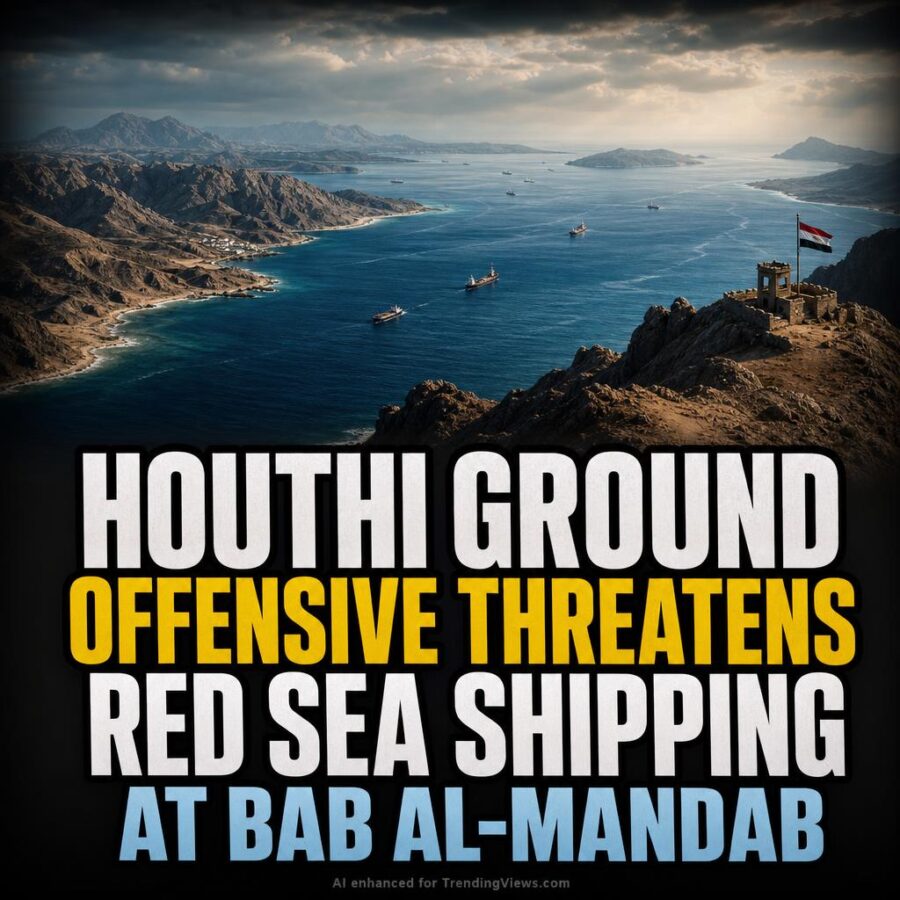
Houthi forces have launched a ground offensive aimed at tightening their grip on shipping routes near one of the world’s most critical maritime chokepoints.
The Iran-backed group, which has controlled large portions of northwestern Yemen for over a decade, opened an assault earlier this month in western Taiz governorate. The operation targeted roads connecting the city of Taiz to the government-held port of Mokha, while pushing toward high ground overlooking approaches to the Bab al-Mandab Strait, the narrow passage linking the Red Sea to the Gulf of Aden.
The fighting has been the deadliest in years. More than 300 combatants and some civilians have been reported killed. Government forces later recaptured parts of Hays district in Hodeidah province and some elevated positions west of Taiz, but Houthi units managed to cut the Taiz-Mokha road, at least temporarily.
Special offer for our readers:
Hands Down Some Of The Best Credit Cards For Balance Transfers
As originally reported, analysts and local officials describe the push as a deliberate effort to position missile, drone, and small-boat launch sites closer to the strait, making attacks on commercial shipping easier to execute.
The Houthis, a Zaydi Shia movement formed in the 1990s, have held Sanaa and most of historically northern Yemen since seizing the capital in 2014. Their territory includes a long Red Sea coastline that already puts them within range of Bab al-Mandab. The internationally recognized government, backed by Saudi Arabia, controls Aden, much of the south and east, and the oil-producing region around Marib.
The group first demonstrated its capacity to disrupt global shipping at scale beginning in November 2023. Citing the war in Gaza, the Houthis attacked more than 100 commercial vessels using missiles, drones, and boats. Several ships were sunk or seriously damaged. Major shipping lines responded by rerouting around the Cape of Good Hope, and Suez Canal traffic dropped by more than half at the campaign’s peak. Insurance premiums, fuel costs, and delivery times all climbed sharply.
Attacks paused following a Gaza ceasefire in late 2025, then resumed in limited form in 2026, including a declared embargo on Saudi-linked shipping in July.
The stakes are now higher. Since the start of the U.S.-Iran conflict this past February, the Strait of Hormuz, which previously handled roughly one-fifth of global oil exports, has come under separate pressure. Saudi Arabia and other producers shifted more of their exports through Red Sea pipelines and ports as an alternative route. Simultaneous disruption at both Hormuz and Bab al-Mandab would squeeze the two main outlets for Middle East energy at once.
Shipping data already show daily transits through both waterways running below pre-2023 levels. Any further Houthi advances near Mokha would add another serious layer of risk to those routes, with consequences that could ripple across global energy markets and supply chains.