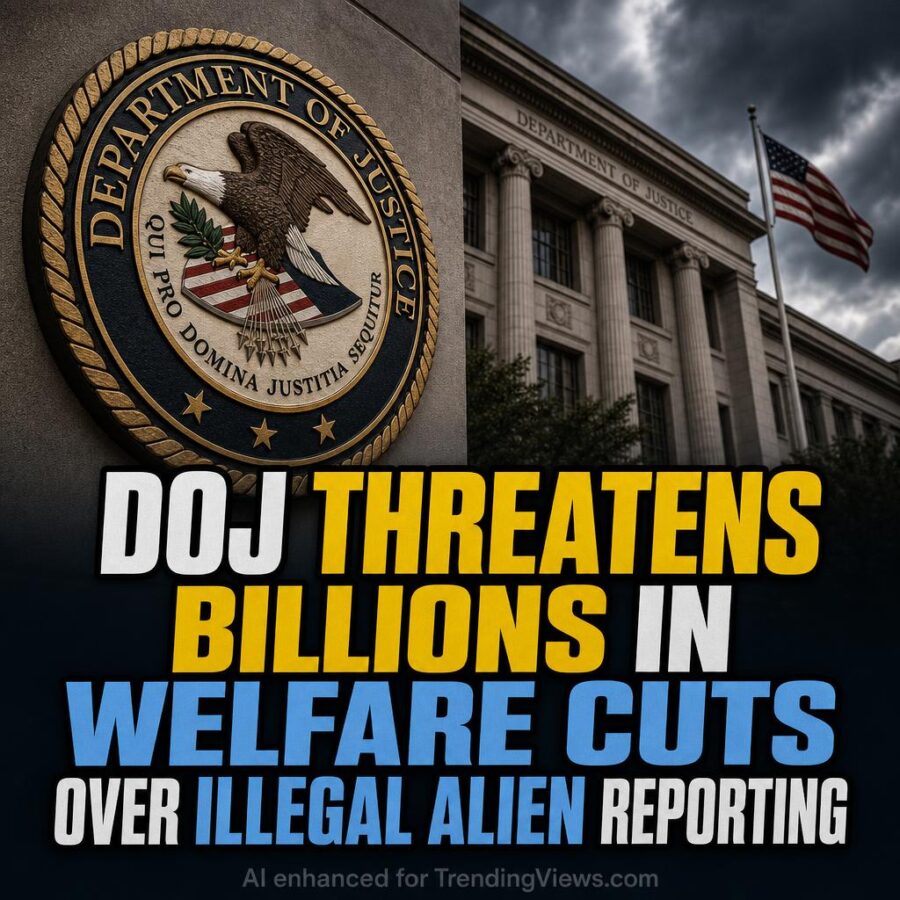
States that shield illegal aliens from federal authorities could lose billions in welfare funding.
The Department of Justice has put states on notice. A newly released legal opinion from the DOJ’s Office of Legal Counsel warns that states participating in two key federal welfare programs must require all state agencies to report known illegal aliens to the Department of Homeland Security. Failure to comply could cost those states billions of dollars in federal funding.
As originally reported, the legal opinion comes directly from the DOJ’s Office of Legal Counsel, giving it significant institutional weight. This is not a political threat from a campaign podium. It is a formal legal position staked out by one of the most powerful legal offices in the federal government.
Special offer for our readers:
8 Top Credit Cards Offering Introductory No Interest into 2027
The Trump administration says the move is designed to strengthen enforcement of the president’s ongoing crackdown on illegal immigration. By tying welfare program participation to immigration reporting requirements, the federal government is using its funding leverage to compel state-level cooperation with DHS.
The states most at risk are those that have resisted cooperation with federal immigration enforcement, many of them Democratic-led. These so-called sanctuary policies have long been a flashpoint between the Trump administration and liberal-leaning states. Now, those policies carry a potential financial consequence that is hard to ignore.
The scale of the potential loss matters. Billions of dollars in welfare funding represents real money that flows directly to residents who depend on those programs. States will face a difficult choice between maintaining their current immigration policies and protecting federal dollars that fund critical services for their residents.
The DOJ’s position draws a clear line. States that want to keep receiving federal welfare funds must ensure their agencies are actively reporting individuals known to be in the country illegally to federal immigration authorities. That requirement applies broadly, touching agencies across state government that participate in the affected programs.
The legal opinion adds formal structure to what has been a long-running standoff between the federal government and states over immigration enforcement. Past administrations have pursued similar pressure tactics with mixed results in court. Whether this latest move survives legal challenges remains to be seen, but the DOJ has now formally committed its position on paper.
For pro-immigration advocates, the warning represents another escalation in a federal push they have consistently opposed. For the Trump administration, it is one more tool in an aggressive immigration enforcement strategy that has defined the president’s domestic agenda since taking office.