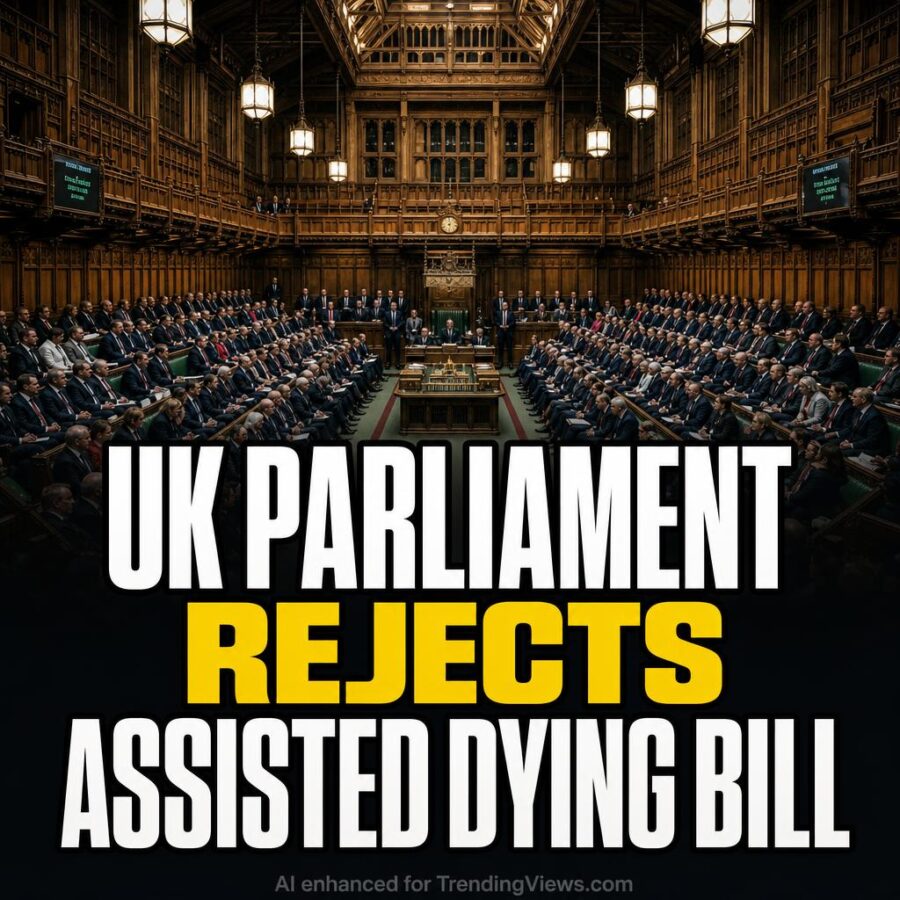
Britain’s House of Commons rejected an assisted dying bill by just 16 votes on Friday.
The Terminally Ill Adults (End of Life) Bill, which would have legalized assisted dying for certain terminal patients in England and Wales, fell 286 votes to 270. An additional 87 members did not vote.
The government took no official position. Lawmakers were granted a conscience vote, meaning no party line applied. Prime Minister Andy Burnham did not cast a ballot.
Special offer for our readers:
Pay No Interest Until 2027
The bill was a private member’s measure introduced by Labour MP Lauren Edwards. It closely mirrored earlier legislation championed by fellow Labour MP Kim Leadbeater, which had already cleared two significant hurdles in the Commons. Leadbeater’s version passed its second reading in November 2024 by 330 votes to 275, then cleared third reading in June 2025 by 314 votes to 291. It ultimately stalled in the House of Lords after more than 1,200 amendments were submitted and parliamentary time expired at the end of the session. Edwards brought the bill back in 2026.
As originally reported, the bill set strict eligibility requirements. A person would have needed to be at least 18 years old, ordinarily resident in England or Wales for a minimum of 12 months, and registered with a GP in either nation. They would also have needed to demonstrate mental capacity under the Mental Capacity Act 2005.
On the medical side, a qualifying person would have needed a terminal illness or disease with no cure and a reasonable expectation of death within six months. Beyond that, they would have needed to express a clear, settled, and informed wish to end their life, free from any coercion or outside pressure.
The process itself involved multiple layers of review. After an initial written declaration, two doctors would have independently assessed the patient at least seven days apart. If both agreed the criteria were met, the case would have moved to a multidisciplinary Assisted Dying Review Panel. A certificate of eligibility from that panel would have triggered a mandatory 14-day reflection period.
The patient would then have made a second formal declaration. The method of assistance would have been a medically approved substance, self-administered by the patient. No doctor would have been compelled to participate. The bill also created specific offenses covering inducement, coercion, and document falsification. Standard criminal law on encouraging or assisting suicide would have continued to apply to any conduct falling outside the bill’s defined framework.
With the vote lost, the bill is dead for the current parliamentary session. No timeline has been announced for any future attempt. Scotland separately rejected its own assisted dying legislation earlier in 2026.