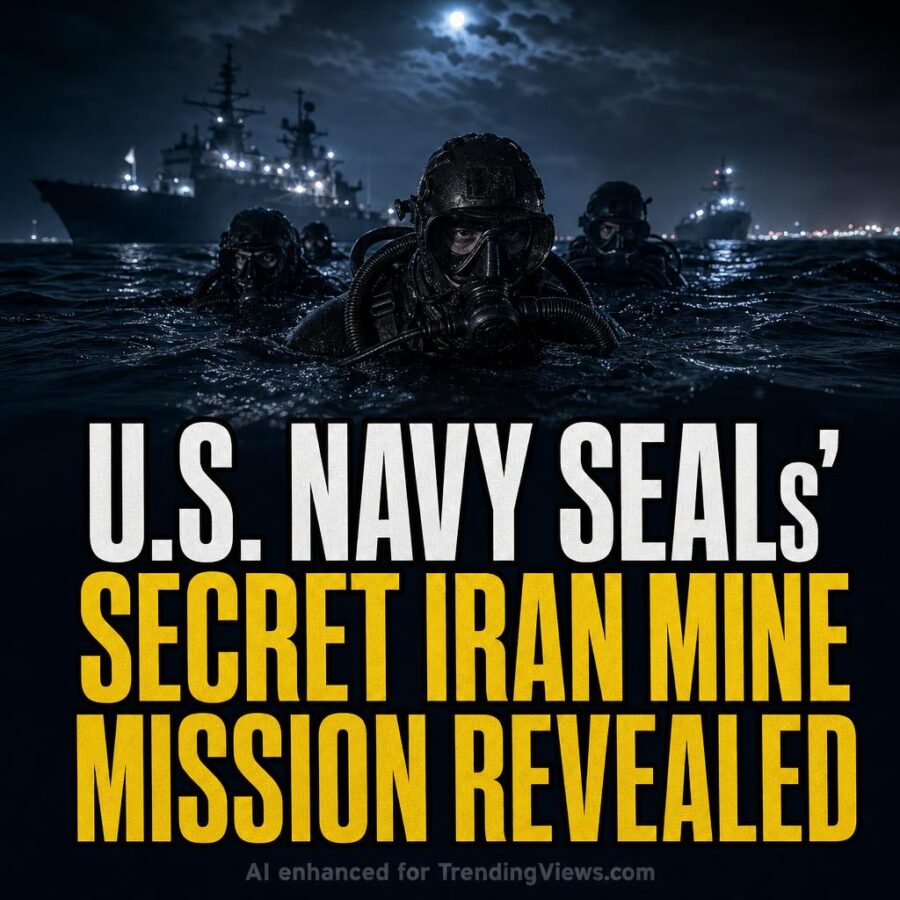
Navy SEAL divers secretly spent four months dismantling Iranian sea mines in the Strait of Hormuz.
The mission was more dangerous and more extensive than anyone outside the operation knew. American forces worked largely at night, using a combination of elite divers, underwater robots, and sophisticated sonar systems to locate and destroy explosives planted in one of the world’s most critical shipping corridors.
U.S. Central Command had acknowledged in April that American forces were beginning to set conditions for mine-clearing operations in the Strait, including the use of underwater drones. But as originally reported, the full scope of what followed was far more significant than that initial disclosure suggested.
Special offer for our readers:
Put Interest On Ice into 2027
The International Maritime Organization estimated that roughly 80 mines had been placed in and around the Strait of Hormuz. That number meant months of painstaking, high-risk clearance work for American personnel.
The process of neutralizing each mine was methodical and slow. Unmanned sonar systems would first sweep the seafloor to pinpoint threats. The Navy used equipment including the Common Uncrewed Surface Vessel, a robotic boat capable of towing underwater scanning systems such as the MK 18 Mod 2 Kingfish. That device uses sonar to map the ocean floor and flag potential explosives.
Once a mine was located, a human diver often still had to finish the job.
Retired U.S. Navy Capt. Bill Hamblet described the final step to the Financial Times. “That is usually followed up by a navy diver who’s got to get in the water and approach the mine, and then put a charge on it and destroy it,” he said.
That meant SEAL divers were regularly entering the water, moving toward live explosive devices, and manually placing detonation charges. It is among the most dangerous tasks in military diving, requiring precision and nerve in equal measure.
Unmanned systems absorbed some of the risk where possible, but they could not eliminate the need for human divers entirely. The technology helped locate threats and, in some cases, engage them, but the process remained slow by necessity. Speed in mine clearance is not a virtue. A mistake can be fatal.
No American casualties have been reported from the operation.
The Strait of Hormuz is one of the most strategically sensitive waterways on the planet. A significant share of the world’s oil supply moves through it, making any disruption to navigation a matter of global economic consequence. Keeping it open required months of quiet, dangerous work carried out largely without public attention.
The mission is now complete, and the Strait remains open. The full details of how that happened are only beginning to emerge.