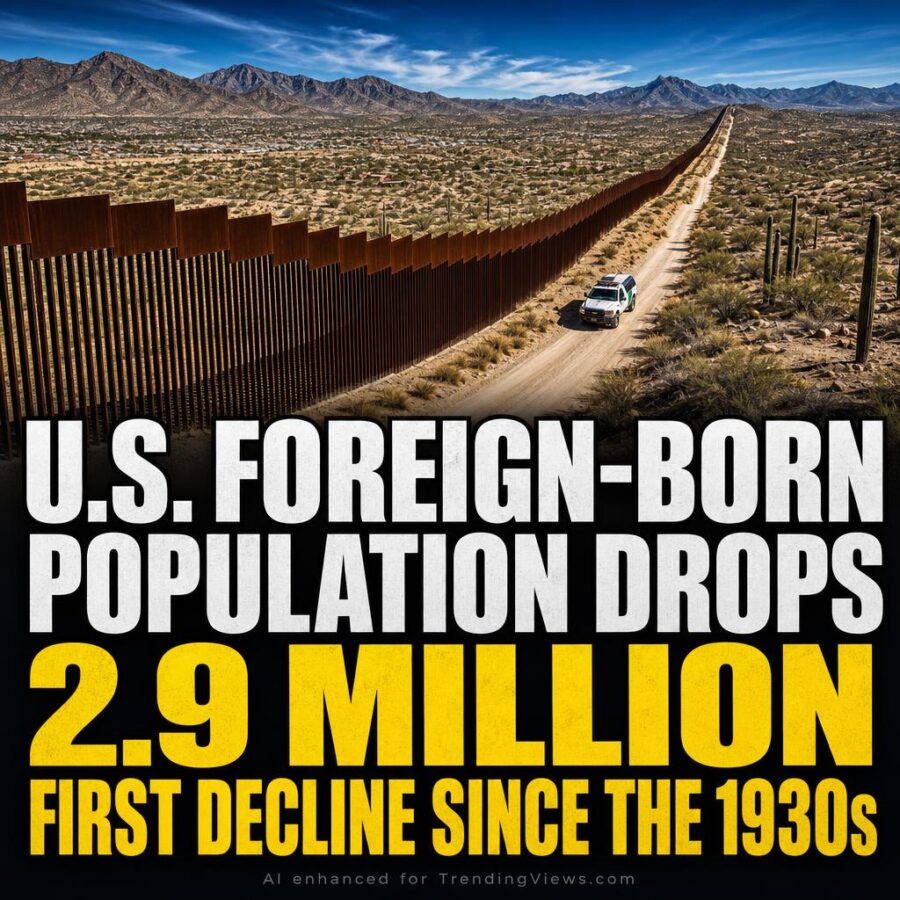
The U.S. foreign-born population just recorded its first decline since the 1930s.
A new analysis from the Center for Immigration Studies, drawing on Census Bureau Current Population Survey data, found the total foreign-born population in the United States fell by 2.9 million between January 2025 and July 2026. Net migration has turned negative for the first time in generations.
That number lands harder when you set it against the recent baseline. During the COVID era under the Biden administration, the foreign-born population grew by 8.3 million. What is happening now is a sharp reversal of that trend, driven by policy that closed the border and changed the incentives for both arriving and staying.
Special offer for our readers:
Hands Down Some Of The Best Credit Cards For Balance Transfers
As originally reported, this marks the first time since the 1930s that the foreign-born population has actually contracted, not simply grown more slowly. The distinction matters. Prior slowdowns in immigration growth were still growth. This is movement in the opposite direction, and it is happening quickly.
The Center for Immigration Studies analysis points to current enforcement policy as the force behind the shift. A border that is effectively sealed, combined with reduced incentives to enter or remain in the country, is producing outcomes that show up in federal survey data within months, not years.
The political weight of this data will not be lost on either party. For the Trump administration, a 2.9 million drop in the foreign-born population is exactly the kind of concrete, measurable result that enforcement-first immigration advocates have argued was achievable. Critics of the policy will note that a shrinking foreign-born population carries its own economic and demographic consequences, though the analysis itself does not address those questions.
What the data does address is scope and speed. The 8.3 million increase under Biden represented one of the largest surges in the foreign-born population in modern American history. The reversal now underway, if the current trajectory holds, would offset a significant portion of that increase within a relatively short window.
Whether the decline continues, levels off, or partially reverses will depend on enforcement consistency, legal immigration processing, and broader economic conditions. But as of July 2026, the Census Bureau data shows a country where the foreign-born population is smaller than it was eighteen months ago. That has not happened in roughly ninety years, and it is not a rounding error. It is a structural shift in the direction of American migration, documented in federal survey data, and it is the direct result of policy choices made at the border and in enforcement priorities since January 2025.