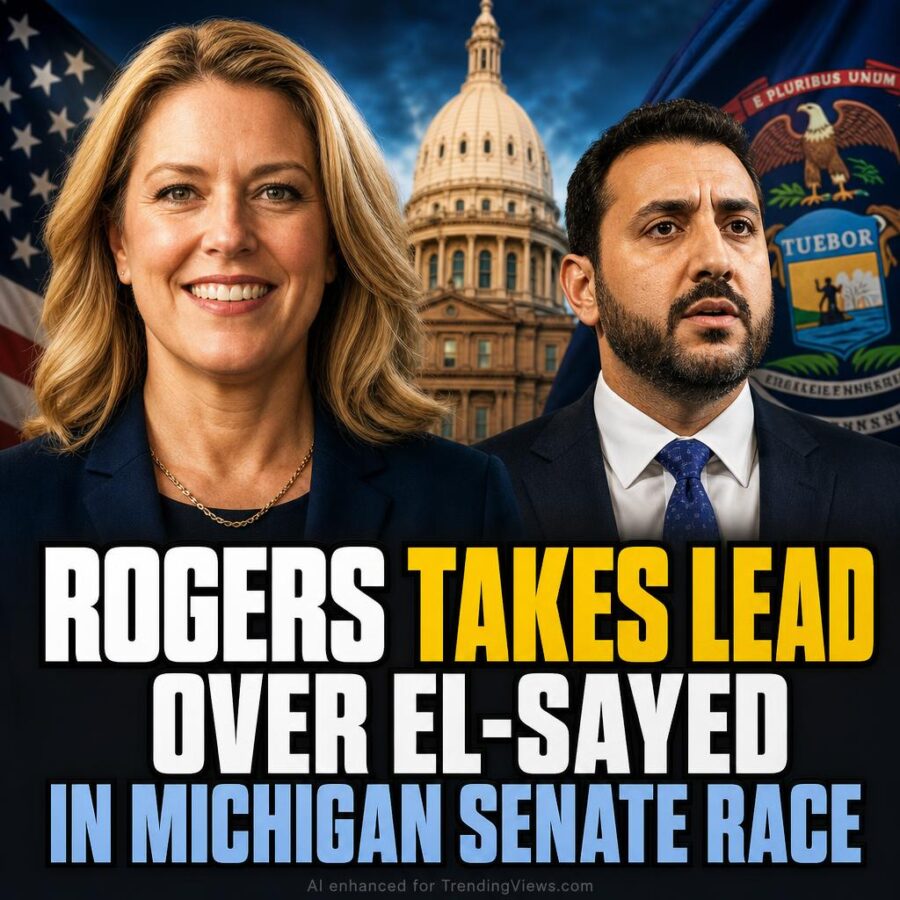
A new poll shows Mike Rogers leading Abdul El-Sayed in Michigan’s open U.S. Senate race.
Rogers, the Trump-backed Republican and former congressman, drew 45.8% support among likely voters. El-Sayed, the far-left Democrat, pulled 44.4%. Nine percent of respondents remained undecided. The survey covered 600 likely Michigan voters and carried a margin of error of plus or minus four percentage points.
Veteran Michigan pollster Richard Czuba, who conducted the survey, called the race a “toss-up.” Rogers’ 1.4-point edge falls within the margin of error, making the contest statistically tied. Still, the shift in momentum matters.
Special offer for our readers:
Tackle your credit card debt by paying 0% interest until 2027
As originally reported, the latest numbers reverse a string of polls that showed El-Sayed ahead. An EPIC-MRA survey released the prior week had El-Sayed up four points, 47% to 43%. A Susquehanna poll conducted earlier in the summer gave him a seven-point lead. Rogers’ new position at the top represents a meaningful reversal.
El-Sayed’s platform has given Republicans plenty of material to define him as a radical. His campaign calls for abolishing Immigration and Customs Enforcement, ending the Senate filibuster, opposing mandatory voter ID under the SAVE Act, imposing term limits on Supreme Court justices, and creating a federal system equalizing judicial appointments across presidential terms. He also supports Medicare for All, shutting down the Line 5 pipeline, and transitioning the country to 100% renewable energy.
On foreign policy, El-Sayed has called for an immediate arms embargo against Israel and renewed funding for UNRWA. He has accused Israel of committing genocide in Gaza and demanded an end to what he calls the illegal and unjustifiable war in Iran. He also backs rejoining the World Health Organization and the Paris Agreement. Senator Bernie Sanders and Representative Alexandria Ocasio-Cortez have both endorsed him. He previously served as a national surrogate for Sanders’ 2020 presidential campaign.
El-Sayed has also faced questions about his political alliance with far-left streamer Hasan Piker, who once declared that America deserved the September 11 attacks. During an April Fox News interview, El-Sayed said he would “never” agree with that statement and called the day “horrible.” But he continued defending his decision to campaign alongside Piker, arguing the remarks needed “context” and accusing critics of practicing cancel culture. “Because you appear with somebody doesn’t mean you agree with them on everything,” he said.
Rogers performed especially well with independent voters, leading El-Sayed among that group by nearly 14 points. He also posted stronger numbers with voters over 40 and those without college degrees. El-Sayed led among younger voters, college graduates, and some Black voters.
One warning sign emerged for Rogers. Among voters who said they were most certain to cast a ballot, El-Sayed led 46.7% to 44.4%. Czuba also identified a 10-point enthusiasm gap between base Democrats and base Republicans, the largest he had measured across four election cycles.
El-Sayed’s narrow primary win exposed further vulnerability. A July Detroit News poll found only 34% of Black Democratic primary voters supported him. He narrowly claimed the statewide nomination by less than one percentage point, even as Haley Stevens carried Detroit and Wayne County by wide margins.