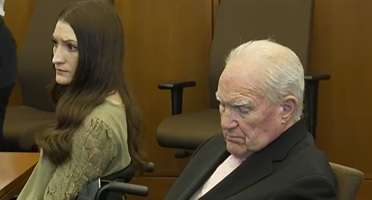
The jury deciding Lindsay Clancy’s fate still cannot agree, even after a judge’s formal push to break the deadlock.
On Tuesday, Judge William Sullivan read the jury a Tuey-Rodriguez charge, a legal instruction designed to encourage deadlocked panels to keep trying. They went back in. By Wednesday, they still had not reached a verdict. The case now sits on the edge of a mistrial.
The facts of what happened are not contested. In January 2023, Clancy strangled her three young children with exercise bands inside the family home. She then cut her own wrists and jumped from a second-floor window. She survived, but the fall left her paralyzed from the waist down. Her three children did not survive.
Special offer for our readers:
Put Interest On Ice into 2027
As originally reported, the jury is not being asked whether Clancy did it. That much is established. What they must decide is what it means under Massachusetts law. The charges range from first-degree murder to second-degree murder to manslaughter, with the additional possibilities of not guilty by reason of insanity, or simply not guilty. The insanity defense sits at the heart of the entire trial, and it is the reason twelve jurors have been unable to find common ground.
The Tuey-Rodriguez charge is Massachusetts’ version of what other states call an Allen charge, sometimes referred to informally as a dynamite charge. It is a carefully structured instruction. The judge reminds jurors that verdicts are how the justice system is supposed to work, that no jury in a future retrial would be better positioned than this one, and that certainty beyond all doubt is not the legal standard. At the same time, the instruction is clear that each juror must hold to their own honest conviction and that caving to group pressure is not acceptable. The burden of proof remains on the prosecution throughout.
If the jury still cannot reach a verdict after that instruction, a mistrial becomes the likely result. A mistrial would not close the case. It would force prosecutors to decide whether to start the entire proceeding over with a new jury, presenting the same evidence and confronting the same central question about Clancy’s mental state at the time of the killings.
That question has no easy answer, which is precisely why the jury has struggled. The insanity defense requires jurors to weigh medical testimony, legal definitions, and deeply uncomfortable facts about a mother who killed her own children and then tried to kill herself. Reasonable people, it turns out, can reach very different conclusions from the same set of facts.
Whether a verdict comes or the case resets entirely, nothing about this resolves cleanly. Three children are dead. Their mother is paralyzed. And a jury is still sitting in a room, unable to agree on what justice looks like.