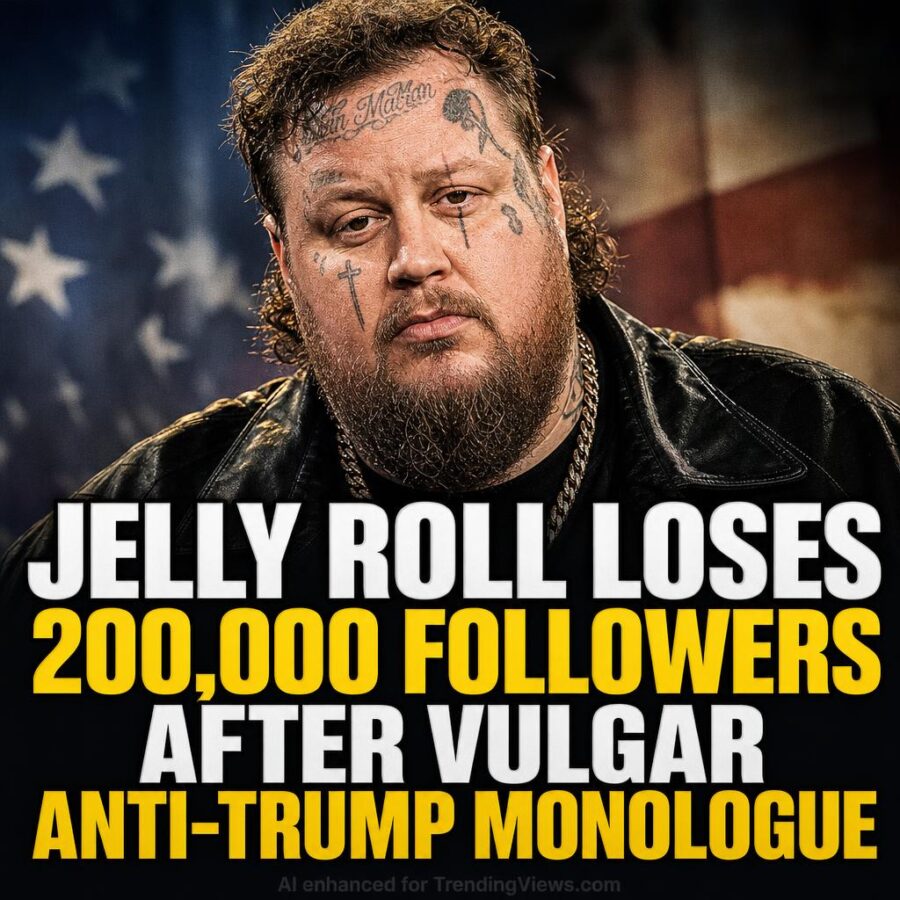
Jelly Roll has lost at least 200,000 social media followers after a week of anti-Trump jokes on late-night television.
The country singer, whose legal name is Jason Bradley DeFord, began guest-hosting “Jimmy Kimmel Live!” on ABC on August 24th. Within days, his fan base began shrinking, as tracked by commentator Benny Johnson, whose team monitored the singer’s accounts across multiple social media tracking services to arrive at that figure.
The backlash hit hard among Jelly Roll’s core audience, which is heavily Christian and conservative, the same fan base widely credited with building his rise to stardom.
Special offer for our readers:
Put Interest On Ice into 2027
According to a report, the trouble started during his very first opening monologue, when the singer devoted several minutes to targeting President Donald Trump over his appearance at the Freedom 250 Grand Prix in Washington, D.C.
Jelly Roll went after Trump on multiple fronts. He mocked the president’s weight, his approval ratings, how he handled an American flag during the event, and the ceremonial drive he took around the racetrack. After footage of Trump waving the flag was shown to the studio audience, the singer responded by asking, “How do you f, k up waving a flag?”
He continued from there, accusing Trump of liking “only his own race” and comparing the presidential motorcade’s ceremonial lap around the track to a loyalty rewards program at a strip club. The studio audience applauded throughout the segment.
The reaction from his fan base was sharp and swift. Rather than walk anything back, Jelly Roll told upset followers to simply stop listening to his music. That response appeared to accelerate the departures rather than quiet them.
The reported loss of at least 200,000 followers represents a measurable cost for a performer whose audience was built largely on the loyalty of the very voters he chose to ridicule. Whether that audience returns, or keeps walking, remains to be seen.