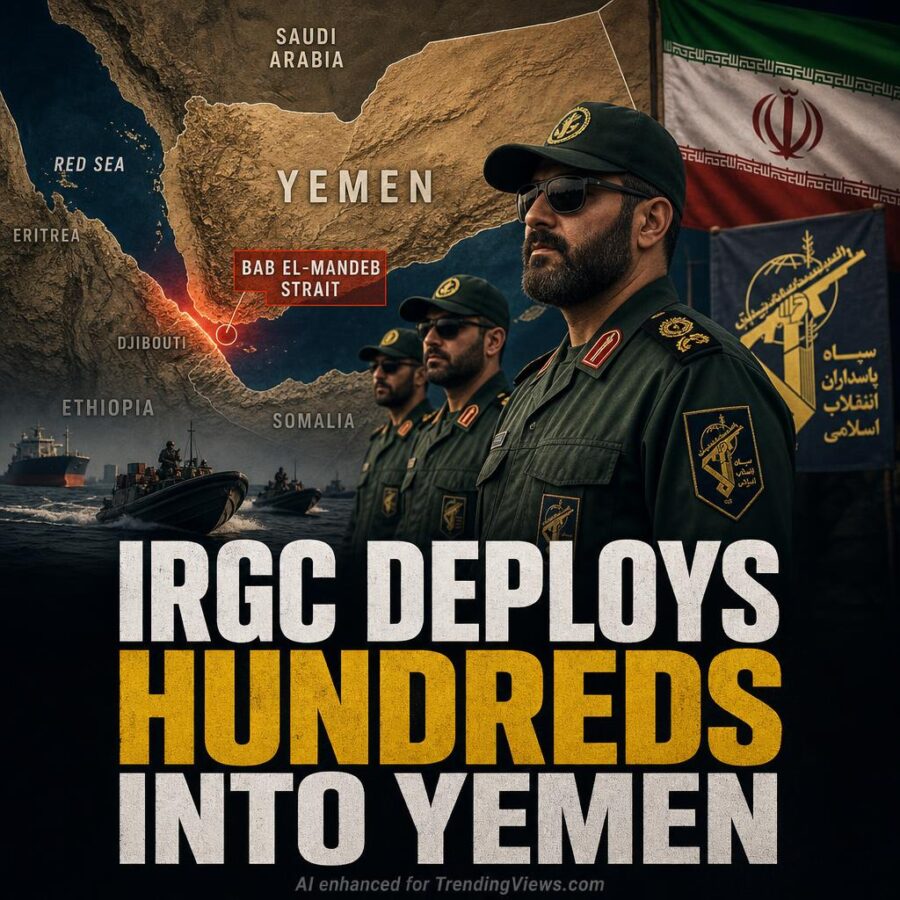
Hundreds of Iranian Revolutionary Guard officers are now operating inside Yemen, U.S. officials believe.
The presence of Islamic Revolutionary Guard Corps personnel marks a significant escalation in Iran’s direct military involvement in one of the world’s longest-running conflicts. Those officers are working alongside Houthi forces as the rebel group tightens its hold on Yemen’s Red Sea coastline and pushes toward one of global shipping’s most critical chokepoints.
The Houthis this week seized Mocha, a strategic port city sitting roughly 45 miles north of the Bab el-Mandeb Strait. That narrow waterway connects the Red Sea to the Gulf of Aden and serves as a gateway to the Suez Canal. Control of the surrounding coast gives the Iran-backed group a stronger position from which to threaten or potentially shut down traffic through the strait.
Special offer for our readers:
Put Interest On Ice into 2027
As originally reported, Yemeni government, Iranian, and regional sources told Reuters that the Houthis’ rapid coastal advance was carried out with direct guidance from IRGC officers on the ground. U.S. officials separately confirmed to CNN that hundreds of those officers are now embedded with Houthi forces, reportedly helping them build the capability to threaten the strait.
United Nations Special Envoy for Yemen Hans Grundberg addressed the Security Council Thursday with a stark assessment. The conflict, he warned, has entered a new and more dangerous phase. His remarks came as news of Mocha’s fall underscored just how quickly conditions on the ground are shifting.
Iran’s involvement appears to be part of a deliberate strategy. Regional and U.S. sources describe the Yemen operation as Tehran’s effort to open an additional front in its ongoing confrontation with the United States across the Middle East. Placing IRGC officers directly inside Yemen, guiding a coastal advance toward the Bab el-Mandeb, fits that pattern.
The stakes extend well beyond the battlefield. The Bab el-Mandeb Strait is one of the world’s most important maritime corridors. Any serious disruption to shipping there would ripple through global energy and trade markets. That concern is already elevated, given that instability near the Strait of Hormuz has placed existing pressure on oil routes elsewhere in the region.
The Houthi capture of Mocha and the IRGC’s expanded footprint inside Yemen together signal a conflict that is growing harder to contain. With a U.N. envoy warning of a new and more dangerous phase, and U.S. officials tracking hundreds of Iranian officers working alongside rebel forces near a critical global shipping lane, the pressure on regional and international actors to respond is mounting fast.