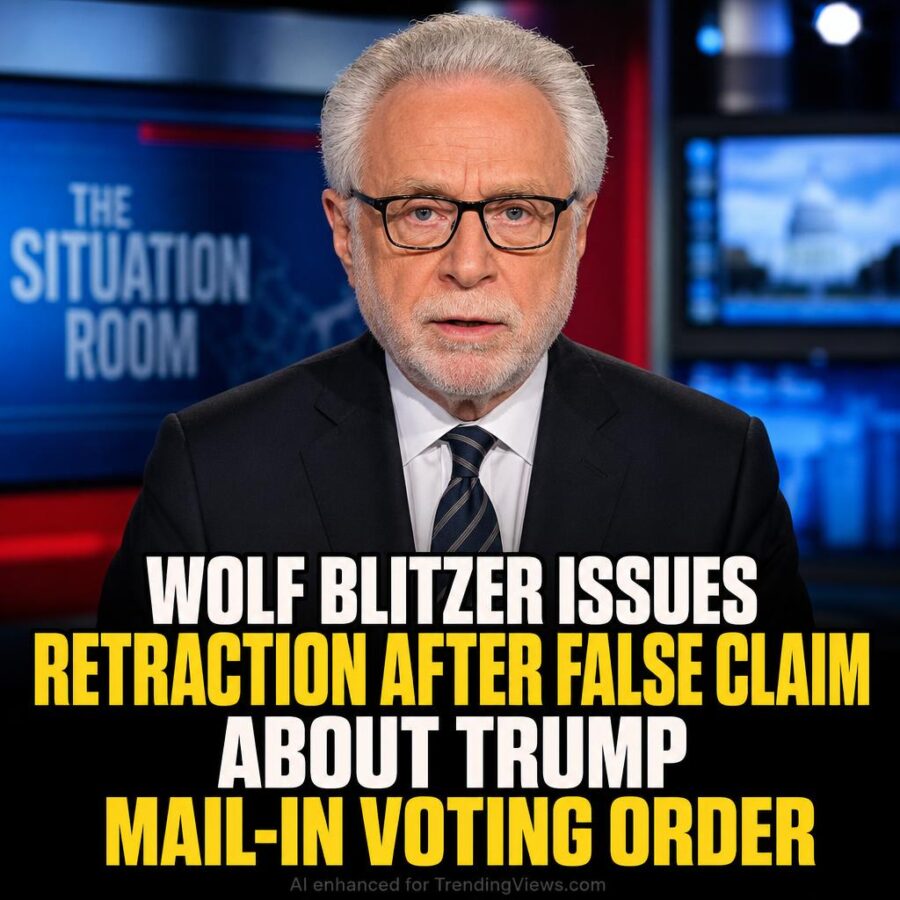
CNN’s Wolf Blitzer aired a false claim about Trump’s mail-in voting order, then quietly corrected it three days later.
The false segment ran on a Friday. The correction came Monday. The two audiences, as anyone in the business knows, barely overlap.
Here is what happened. Blitzer hosted Virginia Gov. Abigail Spanberger on The Situation Room to discuss a Democratic lawsuit against President Trump’s March 31 executive order on mail-in voting. Spanberger argued the administration was trying to scare voters away from a safe and legitimate way to cast ballots. Blitzer offered no pushback and asked for no evidence.
Special offer for our readers:
Tackle your credit card debt with 0% intro APR
Then Blitzer raised the stakes. He pointed out that Virginia has a large military population, many of whom rely on mail-in ballots to participate in elections at all. Spanberger agreed and expanded the claim further, suggesting that diplomats and intelligence officers posted abroad would also be cut off from receiving their ballots by mail under Trump’s order.
That was false. According to a report, military and overseas voters are specifically protected under the Uniformed and Overseas Citizens Absentee Voting Act, known as UOCAVA. The new Postal Service rules put in place to implement Trump’s order explicitly exempt those ballots from any new restrictions. The exemption is not buried in fine print. The order has been publicly litigated for months.
Spanberger is herself a party to the lawsuit challenging the order. That means she had every professional and legal reason to understand precisely what the order does and does not cover. Blitzer, for his part, was conducting an interview on a policy that has been in the public record since March.
On Monday, Blitzer read what CNN described as a “quick note of clarification” on air. He acknowledged that his earlier comments had implied military and overseas ballots would be affected by the order. He then clarified that those voters are exempt under UOCAVA.
The correction was accurate. It was also brief, low-key, and delivered three days after the original claim reached CNN’s full live audience.
That gap matters. The original segment ran with a governor’s enthusiastic confirmation attached, at the top of a live broadcast. The correction arrived stripped of urgency, directed at whoever was still paying attention on a Monday. The scare claim and the retraction reached very different audiences, and the structure of that outcome was entirely predictable from the moment the false claim aired.
The facts were available before the segment began. The executive order was signed months ago. The UOCAVA exemption is explicit. Neither the anchor nor the governor was working from ambiguous or newly surfaced information.
A false claim about military voters aired live. A quiet correction followed days later. That is the sequence, and the sequence tells the story.