Iran fired ballistic missiles at two U.S. Navy warships on Saturday morning, September 5.
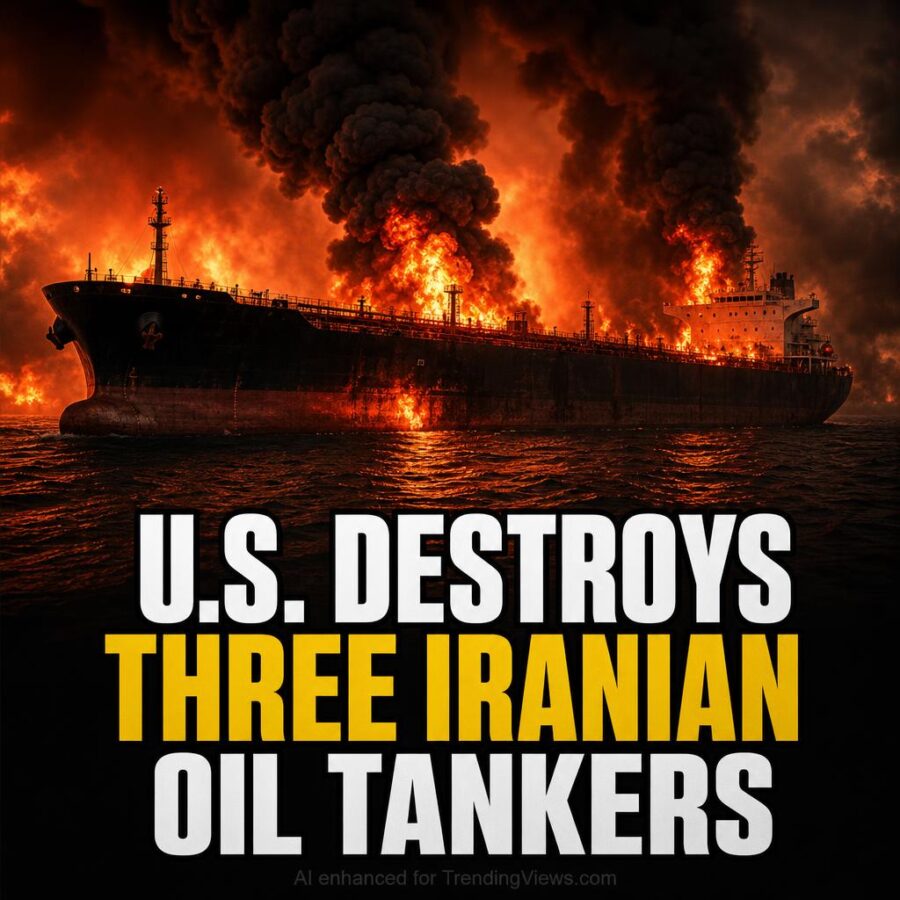
Both ships evaded the attack. The U.S. Central Command confirmed no American personnel were hurt. What followed was swift and deliberate. American forces struck back, targeting three Iranian crude oil tankers that CENTCOM identified as part of a shadow network funding the Islamic Revolutionary Guard Corps and its regional proxies.
Two of those ships are finished. The M/T Downy, operating off Kharg Island, and the M/T Stark 1, near Jask, were both permanently disabled. A third vessel, the M/T Kylo, also known as the Noxen, was struck in multiple critical locations in the Gulf of Oman after its crew was ordered to abandon ship. CENTCOM described it as completely destroyed.
Special offer for our readers:
Hands Down Some Of The Best Credit Cards For Balance Transfers
As originally reported, audio recordings confirmed by CNN captured U.S. military aircraft broadcasting warnings over an emergency channel before the strikes. One transmission stated directly: “Motor Tanker STARK 1, this is the United States military aircraft. I am preparing to fire at your stern. You have 10 minutes to clear the crew from the stern of your ship. Over.” A follow-up warning told the crew to abandon ship entirely.
Admiral Brad Cooper, CENTCOM commander, put the message in plain terms. “Let the message to the IRGC be clear: If you shoot at two of our ships, we will impose an even higher economic cost, taking out three of yours,” Cooper said in a statement. He added that U.S. forces would not hesitate to defend American personnel and would, if necessary, destroy Iran’s oil fleet entirely.
Iranian state-linked outlet Tasnim reported that four U.S. missiles struck a tanker near Kharg Island, Iran’s main oil export hub. Local sources cited by Tasnim said there were no casualties and that crews were being evacuated.
The strikes come nearly a week after hostilities resumed following a period of relative calm. The broader conflict has included repeated disruptions to Strait of Hormuz shipping, attacks on energy infrastructure, and ongoing efforts by both sides to impose economic pressure. Kharg Island has been a central target throughout, given its role handling the majority of Iran’s crude oil exports before the war began.
The U.S. naval blockade of Iranian ports, first imposed in April 2026, was briefly lifted in June after an interim agreement, then reinstated on July 14. CENTCOM reports that Iran has exported no oil from its shores since the blockade resumed. U.S. forces have been redirecting unauthorized vessels attempting to transit the restricted zone.
President Donald Trump signaled Friday that more strikes could be coming, including against hardened nuclear sites. “We may hit Pickaxe very soon,” Trump told reporters, referring to Pickaxe Mountain. He added that U.S. intelligence tracks movement across Iran continuously. “We know everybody that’s moving everywhere all over Iran. And if anything goes bad, we hit them, we hit them hard.”