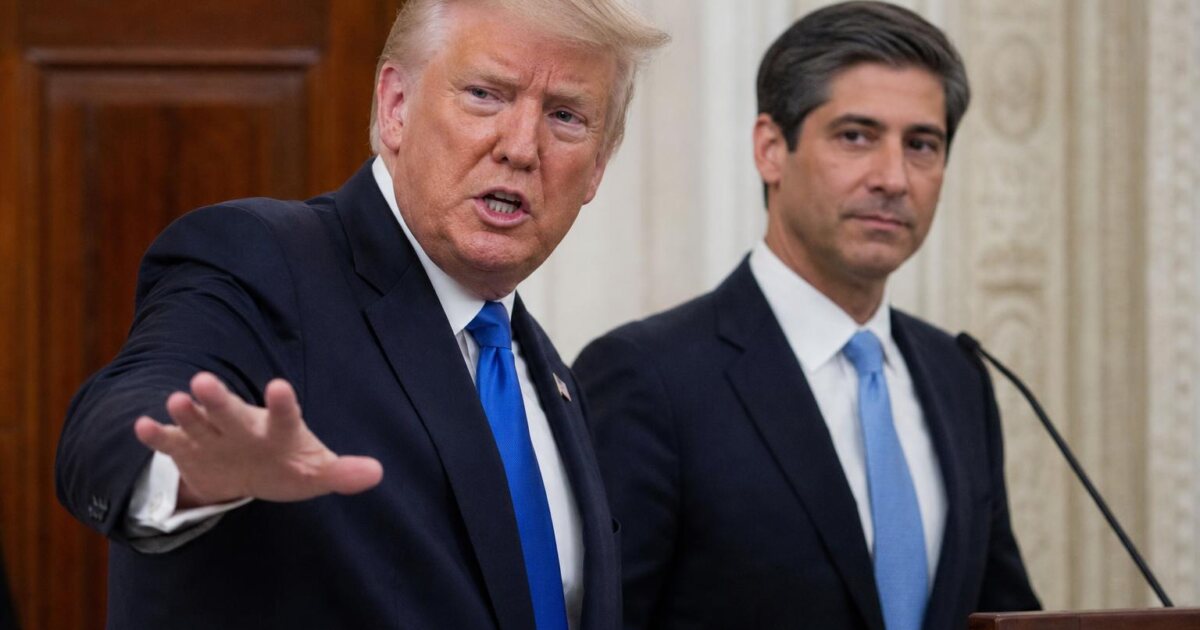
America’s foreign-born population has dropped by an estimated 2.9 million since President Donald Trump returned to office.
That staggering decline may have snapped a migration trend that held for roughly nine decades, marking the first period of negative net migration to the United States in about 90 years.
The numbers come from a new Center for Immigration Studies analysis of the federal government’s monthly household survey. CIS tracked the foreign-born population from January 2025 through July 2026 and found a net loss of 2.9 million people. That count includes naturalized citizens, green card holders, people on long-term temporary visas, and illegal immigrants.
Special offer for our readers:
Hands Down Some Of The Best Credit Cards For Balance Transfers
The drop stands in sharp contrast to the four years before Trump’s return. According to the original report, the foreign-born population grew by 8.3 million between early 2021 and January 2025.
The illegal immigrant population accounted for the bulk of the recent decline. CIS estimated that number fell by 2.3 million over the same period, dropping from 15.8 million in January 2025 to 13.5 million by July 2026. That net figure accounts for new arrivals, deportations, voluntary departures, immigrants who obtained legal status, and deaths.
Steven Camarota, CIS director of research and the report’s lead author, was direct about what the data shows. “The best data we have shows an enormous decrease in the total foreign-born population, with most of the falloff among illegal immigrants,” he said. “Regaining control of the border and robust interior enforcement has partly undone the huge increase in the illegal immigration that took place during the border surge.”
The decline was not evenly distributed across all immigrant groups. Researchers found it was concentrated entirely among noncitizens from Latin America who arrived in the United States in 1980 or later, a group that CIS noted significantly overlaps with the illegal immigrant population.
If the findings hold up under further scrutiny, the United States recorded negative net migration for the first time since the 1930s. That would represent a profound shift in a country that has seen continuous net population growth from immigration for nearly a century.
The analysis captures the early results of Trump’s sweeping enforcement push, which has combined aggressive border controls with expanded interior deportation operations. The combination appears to have driven not just a slowdown in new arrivals but an outright reversal in total foreign-born population numbers.
Whether the trend continues will depend on enforcement levels, legal challenges, and whether new arrivals begin to offset departures in the months ahead.