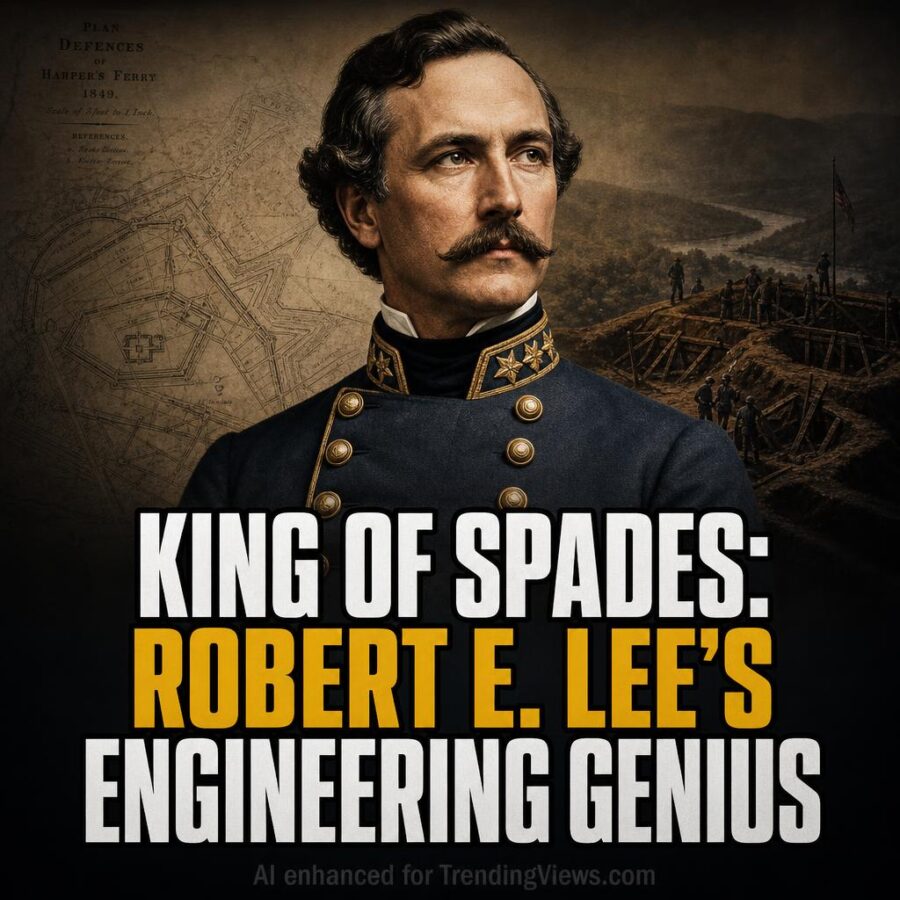
Before Lee commanded armies, he tamed rivers, built forts, and dug trenches.
Robert E. Lee is remembered as one of the Civil War’s most formidable battlefield commanders. But long before he led Confederate forces, he spent years doing something far less glamorous, and arguably just as important. He was an Army engineer, solving hard problems in difficult places with limited resources.
Lee’s early career took him across the country. He worked to stabilize muddy islands along the Southern coast, helped rescue the city of St. Louis from a shifting Mississippi River, and took on the demanding task of constructing Fort Carroll. Each assignment forced him to manage labor, navigate difficult administrators, and find ways to impose order on unpredictable terrain.
Special offer for our readers:
Stop Throwing Out Money: Pay No Interest Until 2027
His postings included Fort Pulaski, the Rip Raps, St. Louis, and Fort Carroll, each one presenting a distinct set of engineering and logistical challenges. At St. Louis, his work redirecting the Mississippi River’s current saved the city’s harbor from being silted into uselessness. It was the kind of slow, methodical, unglamorous work that rarely makes history books but demands real mastery of both science and management.
As originally reported, Lee’s engineering background also connects directly to one of the Civil War’s defining tactical developments. He is credited with helping inaugurate trench warfare, most notably seen in the brutal fighting around Cold Harbor. That innovation did not come from instinct alone. It came from years spent designing fortifications and understanding how earth and geography shape combat.
The argument at the heart of this story is straightforward. Lee’s battlefield reputation in the Civil War was not built solely on natural talent or bold instincts. It rested on a foundation of practical experience accumulated across peacetime postings that historians rarely spotlight. Learning to work with difficult commanding officers, managing large labor forces, and solving engineering problems under bureaucratic pressure all contributed to the general he eventually became.
His nickname, King of Spades, came from soldiers who watched him order trench after trench dug during the Civil War. To them it may have seemed overly cautious. In hindsight, it reflected a man who had spent his entire professional life understanding what fortified earth could do.
Lee’s engineering years represent a chapter that is easy to overlook when set against the drama of the war that followed. But those decades of fieldwork in peacetime, managing projects from Georgia’s coast to Maryland’s Chesapeake Bay, shaped his thinking, built his credibility, and taught him how to turn difficult ground into an advantage.
The general did not appear fully formed at the start of the Civil War. He was built, slowly, one engineering project at a time.