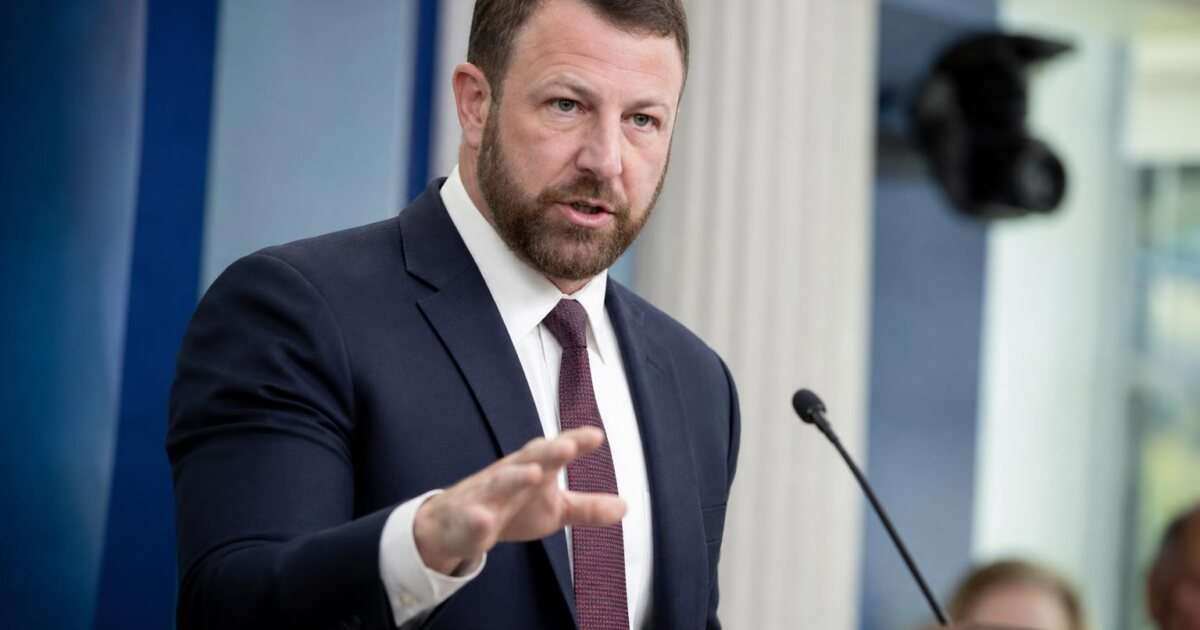
JD Vance told Abdul El-Sayed to stop targeting his wife, on camera, in Michigan.
There is an unwritten rule in American politics that has outlasted Watergate, the Clinton era, and more than a decade of social media dominance. You go after the candidate. You leave the spouse alone. Abdul El-Sayed apparently decided that rule did not apply to him. On Monday in Michigan, Vice President JD Vance made clear that was a mistake.
Vance’s message was short and left nothing open to interpretation. Keep my wife’s name out of your mouth. He delivered it directly, at volume, on camera.
Special offer for our readers:
Put Interest On Ice into 2027
As originally reported, Vance drew a clear line before making his point. He acknowledged that El-Sayed’s public record and his associations are entirely fair game. Michigan voters will weigh all of that when the time comes. But the repeated targeting of Usha Vance, the vice president said, is the part that strikes people as genuinely strange.
Vance is not wrong about that. The pattern has been building for months, and it has not gone unnoticed.
The political calculation behind El-Sayed’s approach is difficult to follow. Attacking a candidate’s spouse rarely moves voters in the direction the attacker hopes. It tends to generate sympathy for the target and scrutiny for the attacker. That dynamic does not change because the political stakes are high or because the target is a high-profile figure.
Vance’s response was calibrated to make exactly that point, without lengthy explanation. He drew the boundary in plain language and let the moment speak for itself. The contrast between a vice president defending his wife in clear, direct terms and a challenger who has been taking shots at her was not subtle.
El-Sayed is running in Michigan, a state Vance knows well. The vice president’s decision to respond publicly and forcefully, rather than through a statement or a spokesperson, signals that the campaign considers this worth confronting head-on.
The old rule about spouses exists because voters tend to enforce it themselves. Candidates who ignore it often find out the hard way that public sympathy is a finite resource, and burning it on attacks against someone’s family is rarely a winning trade.
Abdul El-Sayed found out on Monday what politicians have been learning for decades. Go after the candidate. Leave the family out of it. When you do not follow that rule, the candidate tends to notice, and in this case, the candidate is the vice president of the United States, who was happy to say so out loud.