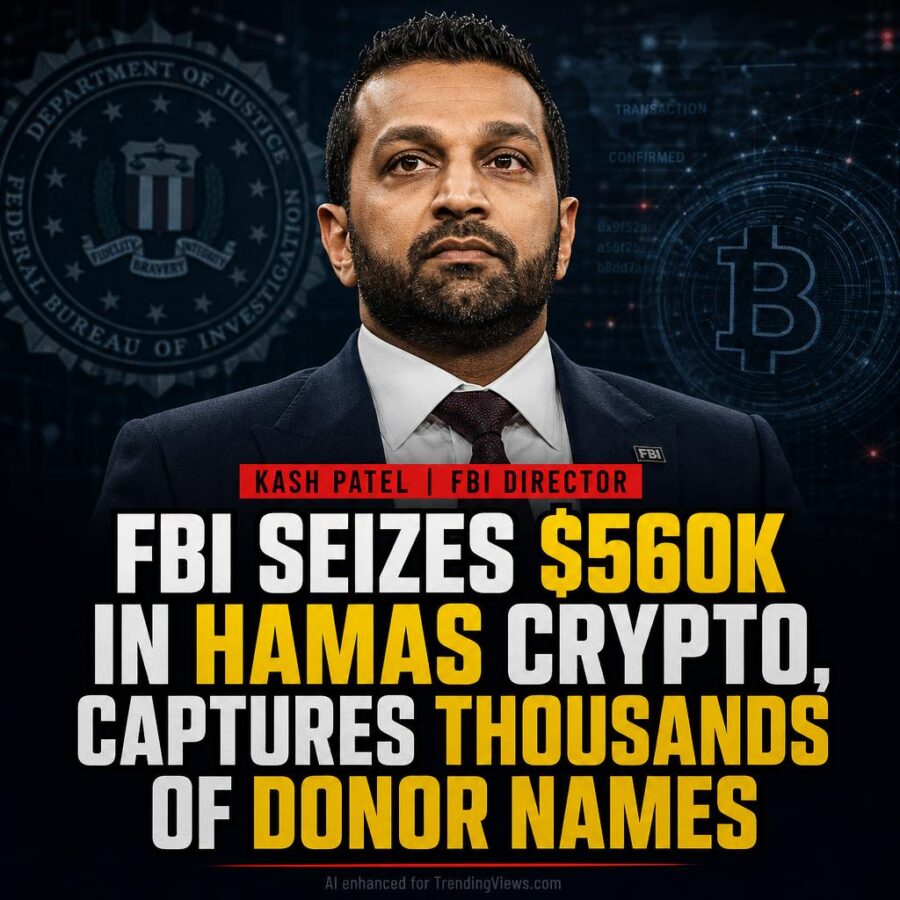
The FBI seized over $560,000 in Hamas cryptocurrency and captured a list of thousands of would-be donors.
That is the bottom line from a Justice Department operation that dismantled a Hamas digital fundraising network built on one core bet: that crypto wallets, encrypted chats, and constantly rotating addresses would keep the money invisible. The bet failed.
Three court-authorized warrants, issued in March, June, and October of 2025, gave FBI agents the legal authority to capture the funds. Investigators spent more than a year tracking the network. They used human sources to identify the wallets connected to the operation, then followed the money as it moved through a rotating series of addresses distributed through an encrypted group chat and a dedicated fundraising website.
Special offer for our readers:
Tackle your credit card debt with 0% intro APR into 2027
As originally reported, the FBI’s Albuquerque field office also seized the domains and servers running AlQassam.ps, the primary website of Hamas’ military wing. Taking control of that infrastructure did more than shut a page down. It allowed agents to intercept donations that supporters were still actively attempting to send, in real time.
U.S. Attorney Jeanine Pirro delivered a direct message to the group: their networks are not secure, their crypto is not safe, and efforts to strip them of the capacity to fund violence will continue.
The half-million dollars matters, but the donor list may matter more. Thousands of individuals reached out online to fund a group responsible for the October 7 massacre, and the Justice Department says that information is now feeding future counterterrorism investigations. Assistant Attorney General for National Security John Eisenberg connected the operation directly to October 7, framing the seizures as a way to cut off the money Hamas uses to recruit, radicalize, and carry out attacks.
This was not the first move in the campaign. In March 2025, the DOJ seized roughly $201,400 tied to Hamas fundraising addresses that had already processed more than $1.5 million since the previous October. Court filings laid out the mechanics in detail. An encrypted group chat fed supporters a shifting list of at least 17 wallet addresses. Donations were funneled into an operational wallet and then pushed through exchanges and over-the-counter brokers to obscure the trail. FBI affidavits trace Hamas crypto fundraising activity back to early 2019, including instructions that coached donors on how to avoid detection.
Those donors stayed anonymous right up until they did not.
The broader lesson here is straightforward. For years, the assumption on the terror financing side was that digital currency had opened a corridor the U.S. government could not effectively police. This operation is a direct rebuttal. The blockchain ledger is permanent. Sources are findable. Patience consistently beats obfuscation.
Hamas built its digital fundraising operation on the belief that no one was watching closely enough to follow the money. Someone was, the entire time.