America’s family farms are fighting for survival, and a new documentary is pulling back the curtain on exactly why.
Turning Point USA’s Frontlines series has turned its camera on southern New Mexico, where multi-generational ranching and farming families say they are being crushed by a combination of rising costs, foreign competition, and what they describe as cartel money flooding the agricultural market.
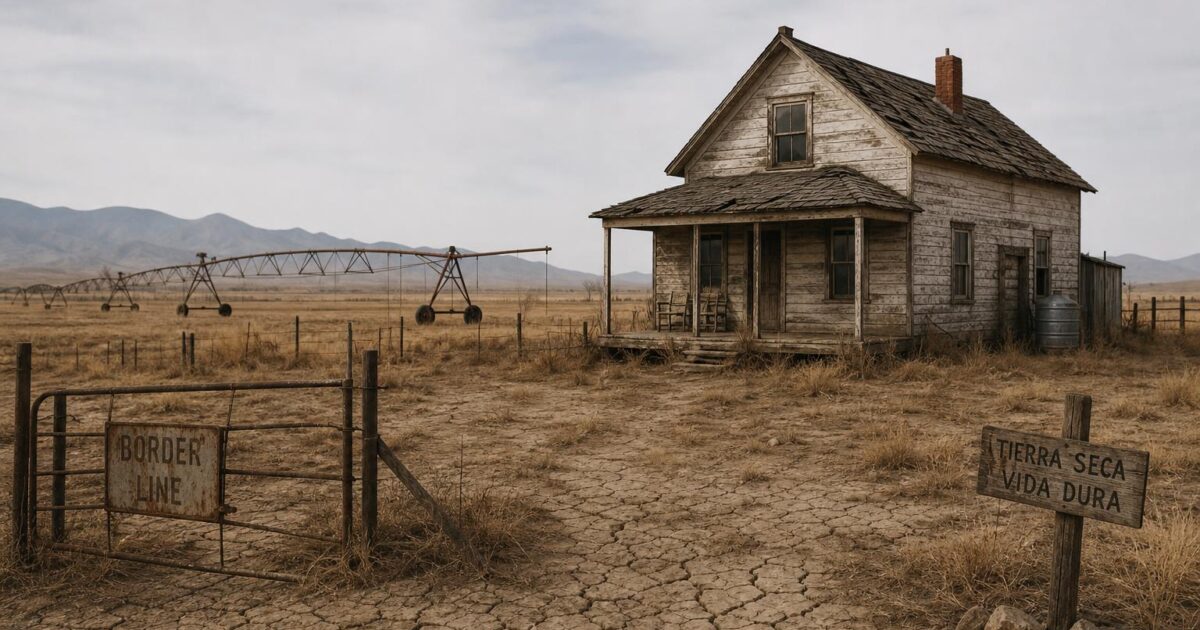
The 17-minute film opens with a stark warning. “The American farm is the bedrock of our nation, a symbol of independence and hard work,” the narration states. “But across the borderlands, that foundation is cracking.”
Special offer for our readers:
Put Interest On Ice into 2027
The farmers interviewed don’t mince words. One grower said the economics simply don’t add up anymore. “You would think that we would be able to produce food and sell it to our own country cheaper. But we can’t,” he said, pointing to the volume of imported produce coming in from Mexico. Another farmer summed up his frustration with painful honesty. “I love bloody fingers and dirty fingernails. It’s the not being able to pay my bills part that gets to weighing pretty heavy.”
According to the original report, the documentary cites data from the USDA’s 2022 Census of Agriculture showing more than 140,000 farms closed nationwide, with New Mexico suffering the largest percentage decline of any state. The trend has accelerated consolidation, leaving the nation’s biggest agricultural operations to grow while family farms disappear.
One of the documentary’s most striking claims involves Mexican drug cartels. Luna County Magistrate Judge Scott Chandler and County Commissioner Colette Chandler argue that cartel money has been flowing into legitimate farming operations south of the border as a laundering mechanism. When they’re using trafficking human money or trafficking drug money to buy hay farms, buy onions, buy chili, and then send it to us, American companies can’t be expected to compete against that,” Chandler said.
The Chandlers contend that as border crossings have dropped under the current administration, criminal organizations have pivoted toward legitimate industries to move their money. Agricultural goods, they argue, are attractive because they are easy to transport and always in demand.
Trade policy is another sore spot. Second-generation farmer Don Hartman recalled what happened after NAFTA took effect. “We used to grow jalapenos here for 16 cents a pound. When they passed NAFTA, they immediately dropped the price to nine cents because they could get it cheaper down there.” Third-generation farmer Colvier Montes called for seasonal tariffs to give American growers a window of protection during harvest. “When the American farmer, we should have priority in this country. And we don’t. That’s wrong,” he said.
Fertilizer costs are adding more pressure. Farmers note that much of the world’s supply passes through the Strait of Hormuz, meaning Middle East tensions can spike production costs almost overnight, with producers absorbing the hit rather than passing it on.
Ranchers also took aim at consolidation in the meat processing industry, arguing that a small number of large companies capture most of the profit while family operations are left behind. As one rancher pointed out, the higher prices consumers see at the grocery store rarely make it back to the farm.