New Videos Tagged with congress



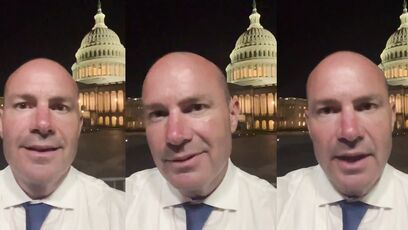
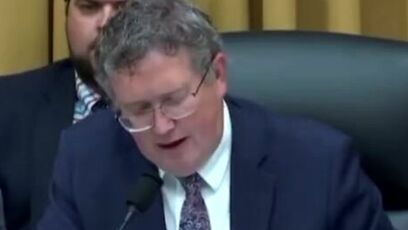
Congressman Massie has something to say...
"In August 2021, when the Pfizer shots received FDA licensure, and just before the booster received EUA, the top two FDA vaccine reviewers with decades of experience announced they were leaving the agency," said Chairman Thomas Massie (R-KY). "During the pandemic, politics overruled science at the government institutions entrusted with protecting public health. The FDA abandoned its congressional directive to protect citizens from false claims and undisclosed side effects, and instead ignored its own rules to pursue a policy of promoting the vaccine while downplaying potential harms. Exposing and acknowledging mistakes that were made is a necessary step toward restoring integrity and trust in our regulatory agencies."
The Subcommittee's investigation also revealed that the administrative state mishandled reports of vaccine injury, despite requirements to actively obtain, synthesize, and report feedback on the safety and efficacy of the Emergency Use Authorization (EUA) vaccine. Two former FDA scientists, Dr. Marion Gruber and Dr. Philip Krause, testified to the Subcommittee that they felt pressure to cut corners on the vaccine review, which was due to outside pressure to provide immediate approval so that the government could mandate vaccines. Despite evidence of harms from the EUA vaccine, the Biden Administration sought to fully approve the Pfizer vaccine through the Biologics Licensing Application (BLA) process.
Under the leadership of then-Acting FDA Commissioner Dr. Janet Woodcock, a long-time FDA staffer who the Biden Administration promoted to Acting Commissioner, and Dr. Peter Marks, head of the FDA's Center for Biologics Evaluation and Research (CBER), the agency cut corners in its usually rigorous BLA process to brand the Pfizer EUA vaccine as the only fully licensed "safe and effective" COVID-19 vaccine on the market at the time. Today, former Acting FDA Commissioner Woodcock says that, as it relates to vaccine-related injury, she is "disappointed in [her]self" and that the FDA did not do enough to address vaccine-related injury.
The FDA succumbed to the Biden Administration's pressure to act beyond its authority, which may have long-term impacts on the agency's ability to confidently serve the American public. This poor policy by the Biden Administration reveals many significant problems related to accountability and good decision making in the administrative state that warrant legislative reform.
Read the full interim staff report and appendix here.
###
- 6.3K
- 0
Congress 'should police the Supreme Court': Dem. Rep Katie Porter, on The View
The Constitution’s Framers structured the Constitution to promote the separation of powers and
protect the federal courts from undue influence by Congress and the executive branch. Among
the federal courts, the Constitution grants the Supreme Court special status. As a historical
matter, Congress has also traditionally recognized that the Supreme Court plays a unique role
within the constitutional system.
However, the Constitution does not impose complete separation between the judiciary and the
political branches. Although it establishes a federal judicial branch that is separate from the legislative and executive
branches and benefits from certain important protections, the Constitution also grants the political branches, and especially
Congress, substantial power to regulate and otherwise influence the federal courts. Supreme Court decisions and long-
standing practice also establish that Congress has the power to regulate many aspects of the Supreme Court’s structure and
procedures.
Discussion of Supreme Court regulation and reform has attracted significant public attention at various points in American
history and has garnered renewed public attention in the past decade. Key areas of discussion include the Court’s procedures
for handling emergency litigation; concerns about politicization, both in the selection and confirmation of judicial nominees
and in the Court’s rulings; and some observers’ substantive disagreement with certain Court decisions.
Many prominent Court reform proposals from recent years fall into two main categories: those that would change the size of
the Supreme Court (sometimes called “court packing”) and those that would impose term limits or age limits for Supreme
Court Justices. Congress has broad authority to set or change the size of the Supreme Court through ordinary legislation, but
implementation of term or age limits would likely require a constitutional amendment. Some proposals would change the size
of the Court or modify Justices’ tenure while also making other structural changes, such as having Justices rotate between the
Supreme Court and the lower federal courts, dividing the Supreme Court into panels, or seeking to ensure ideological balance
on the Court. Those proposals might raise various constitutional questions on a case-by-case basis.
Legislators and commentators have also advanced other proposals to change the Supreme Court’s jurisdiction or procedures.
Prominent proposals include making changes to the Court’s motions docket (which some commentators call the “shadow
docket”); limiting the Court’s appellate jurisdiction over certain categories of cases (sometimes called “jurisdiction
stripping”); imposing voting rules on the Court, such as requiring the agreement of a supermajority of Justices before the
Court can declare a law unconstitutional; allowing Congress to override Supreme Court decisions; imposing new judicial
ethics rules for Justices; and expanding transparency through means such as allowing video recordings of Supreme Court
proceedings.

- 3.0K
- 8