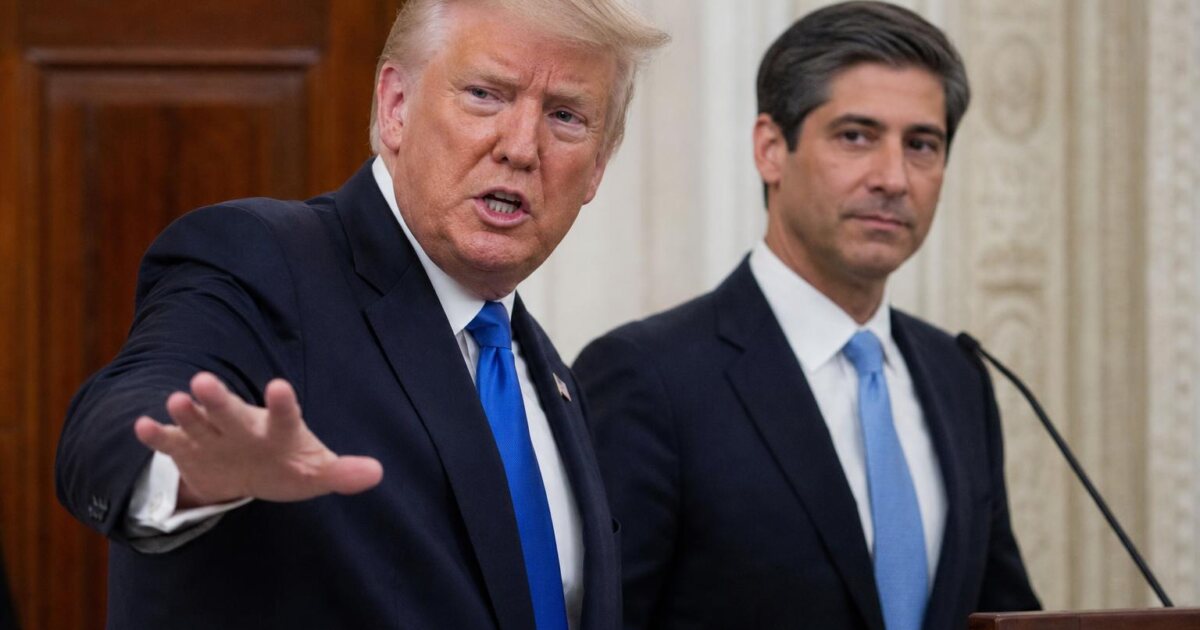
The Supreme Court handed President Donald Trump a sweeping victory Monday, ruling that he holds the constitutional authority to fire Democratic Federal Trade Commissioner Rebecca Slaughter. In the same breath, the court wiped out a 91-year-old legal precedent that had long shielded certain independent agency officials from White House control.
The 6-3 decision fell along ideological lines, strengthening presidential power over the executive branch and delivering a significant blow to the independence of federal regulatory agencies.
At the heart of the ruling was the court’s 1935 landmark decision in Humphrey’s Executor v. United States, which had allowed Congress to protect certain executive branch officials from being removed by the president except for cause. That protection is now gone.
Special offer for our readers:
8 Top Credit Cards Offering Introductory No Interest into 2027
If anything more is left of Humphrey’s, we overrule it,” Chief Justice John Roberts wrote for the majority.
As originally reported, the decision gives Trump the right to remove Slaughter, a Democratic appointee who became the central figure in his push to dismantle limits on presidential removal power.
The reach of this ruling extends well beyond the FTC. It could affect roughly two dozen multimember agencies across the federal government, covering vast stretches of American life including labor disputes, federal employee rights, workplace discrimination, credit unions, product recalls, and plane accident investigations.
Legal conservatives had argued for years that the old precedent violated the separation of powers by allowing executive branch officials to operate without meaningful accountability to the elected president. The conservative majority on the court had already chipped away at Humphrey’s Executor in several recent rulings before Monday’s decision finished the job entirely.
After returning to the White House, Trump moved to fire several heads of independent agencies despite statutory protections designed to limit that authority. Those officials largely won in lower courts, where judges were bound by the 1935 precedent. But the Supreme Court has the power to overrule its own prior decisions, and on Monday it exercised that power.
The case brought the legal battle back to the same agency that sparked the original 1935 ruling. In Humphrey’s Executor, the court held that Congress could restrict the president from removing heads of agencies that exercised what it called “quasi-judicial” and “quasi-legislative” functions. That framework, which survived nine decades of American governance, is now history.